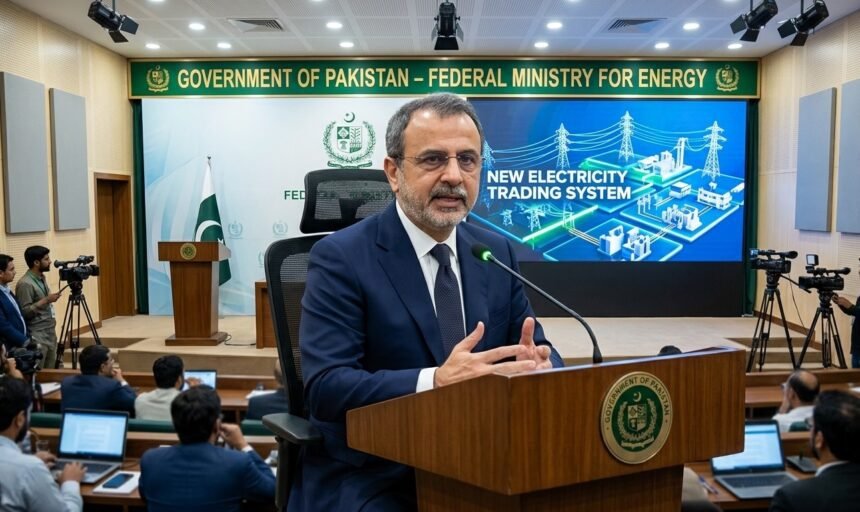
ISLAMABAD, September 20, 2026: Pakistan has taken a major step towards reforming its electricity market as the government launched the country’s first competitive electricity wheeling auction under the Competitive Trading Bilateral Contract Market (CTBCM).
Federal Minister for Energy Sardar Awais Ahmad Khan Leghari announced that the government was now practically moving out of the electricity purchasing business, allowing power producers and consumers to conduct transactions directly through a competitive market mechanism.
Under the first phase, 400 megawatts (MW) of electricity will be offered through a wheeling auction. The government plans to bring a total of 800MW of electricity demand into the competitive market over the coming five years.
The new system is designed to move Pakistan away from the traditional single-buyer model, under which electricity is centrally purchased and supplied to consumers. Under CTBCM, eligible businesses and industrial consumers will be able to purchase electricity directly from power producers through bilateral contracts, using the national transmission and distribution network.
Initially, the system will focus on large consumers, particularly those using more than one megawatt of electricity. The government says the competitive model could eventually expand and provide greater choice to ordinary consumers as the electricity market develops.
Leghari said the first wheeling auction would be conducted through a transparent process. The procedure includes issuance of auction documents, assessment of eligibility, evaluation of bids, approval of auction results and allocation of the approved electricity quantum. The Independent System and Market Operator (ISMO) will oversee the auction process.
According to the Power Division, the competitive electricity market is intended to encourage more efficient power generation, improve the utilisation of existing plants and create incentives for better-priced and more reliable electricity supply. The reforms could also facilitate greater participation by renewable energy producers, battery storage systems and other flexible energy resources.
The government has described the development as part of a long-term transition from a centrally controlled electricity procurement structure towards a more competitive and consumer-oriented market. Officials expect greater competition in power procurement to help industries manage electricity costs and improve their competitiveness in international markets.
The launch follows recent regulatory steps by the National Electric Power Regulatory Authority (NEPRA), including the determination of Use of System Charges for open-access users. The decision provided the regulatory framework needed to operationalise open access under CTBCM and proceed with the first competitive auction.
The reform is being implemented gradually, with the government aiming to develop a functioning electricity market in which suppliers and eligible consumers can negotiate and transact directly rather than relying solely on government-led power procurement.