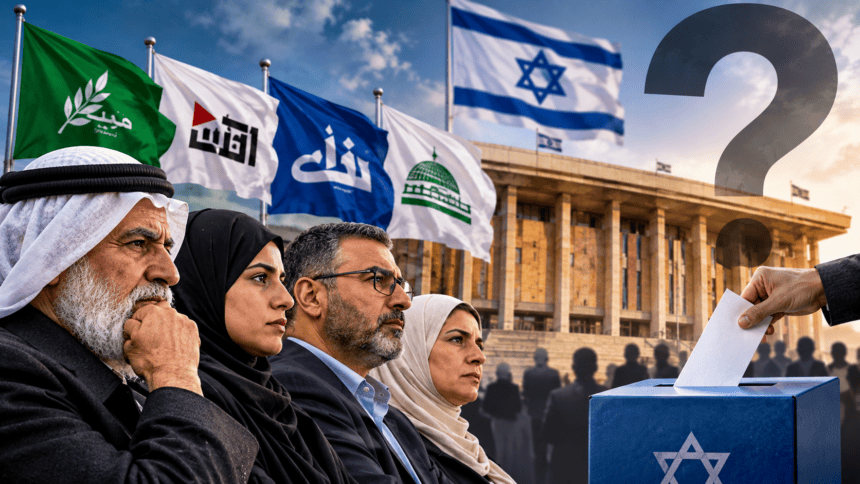
The political influence of Israel’s Arab parties has effectively collapsed. Once a potential kingmaker in the Knesset, the Joint List has splintered, leaving Arab representation divided, disillusioned, and largely sidelined in the current national security climate.
The rupture began in 2022 when the Ra’am party—an Islamist faction—broke with decades of tradition by joining a governing coalition. Mansour Abbas, Ra’am’s leader, argued that direct participation was the only way to secure resources for neglected Arab towns. His gamble yielded initial infrastructure funding but triggered a backlash from ideological purists who view any cooperation with a Zionist government as a betrayal of the Palestinian cause.
Today, the political map is a shadow of its former self. Ra’am sits in the opposition, focused on civil issues and community safety. Meanwhile, Hadash-Ta’al, a coalition of communists and nationalists, remains locked in a strategy of principled opposition, refusing to engage with the state’s security apparatus.
The war in Gaza has widened this chasm. The mainstream Israeli public view has shifted sharply to the right, narrowing the space for Arab lawmakers to maneuver. Any criticism of the military campaign is quickly labeled as disloyal, while silence is interpreted as complicity by their own constituents.
“The debate isn’t just about policy anymore; it’s about identity and survival,” says one Jerusalem-based political analyst. “When the state is in a total war footing, there is no appetite for the nuances that Arab parties bring to the table.”
The consequences are tangible. Voter turnout in Arab communities plummeted during the last election cycle, signaling deep-seated apathy. Many voters feel that whether they vote or boycott, the outcome remains the same: a government that does not consider them stakeholders.
The parties themselves are now struggling for relevance. Ra’am is attempting to pivot toward a pragmatic, local-government model, hoping to address the surging crime rates that have crippled Arab municipalities. Hadash-Ta’al continues to focus on national identity and solidarity, but they are increasingly isolated within the Knesset chambers.
Without a unified front, the Arab minority’s influence in Israeli politics has hit a floor. As the Knesset pushes through legislation that further alienates the Arab sector, these parties are finding that their biggest challenge isn’t winning seats—it’s proving to their own people that the ballot box still matters.