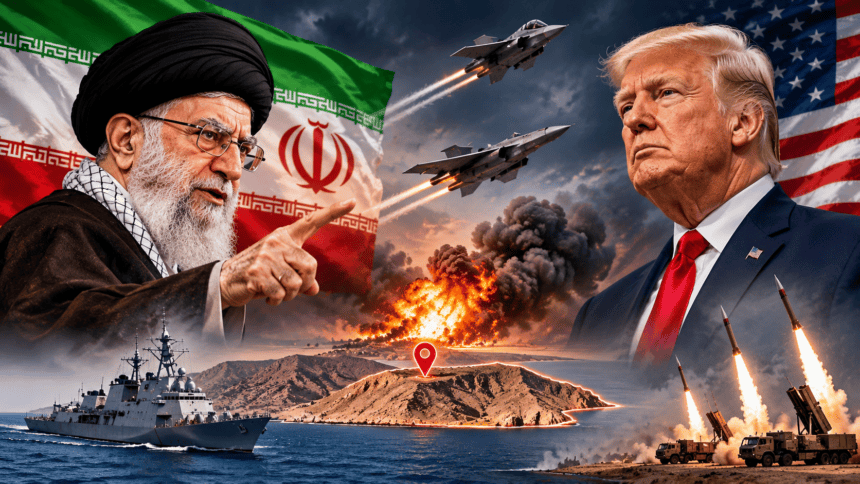
Tehran has promised a “crushing response” following reports that U.S. forces conducted precision strikes against military installations on Qeshm Island. The operation, which Pentagon officials confirmed late Tuesday, marks a volatile escalation in the Strait of Hormuz.
The strikes targeted radar arrays and anti-ship missile batteries positioned near the island’s southern coast. Washington claims these assets were being primed to disrupt commercial shipping lanes, a move the White House labeled an “imminent threat” to international maritime security.
For the regional shipping industry, the stakes are immediate. Qeshm sits at the narrowest point of the Strait, the primary artery for global oil transit. Insurance premiums for tankers traversing the waterway spiked by 15% within hours of the first explosions.
“We are not looking for a conflict, but we won’t stand by while our interests are targeted,” a senior U.S. defense official told reporters at the Pentagon. The official declined to confirm the exact munitions used, citing operational security, but dismissed claims of civilian casualties.
Tehran’s rhetoric suggests a different reality. Islamic Revolutionary Guard Corps (IRGC) commanders issued a statement early Wednesday via state media, dismissing the U.S. justification as “a fabrication to cover an act of aggression.” They warned that any further incursions into Iranian territory or sovereign waters would be met with direct fire.
This friction isn’t new. Tensions have simmered since the collapse of the 2015 nuclear deal, but the military engagement on Qeshm represents a shift from shadow-boxing to open confrontation. Analysts point to the strike as a calculated gamble by the White House to reassert dominance in the Gulf, though the move risks drawing the U.S. into a prolonged regional quagmire.
As the smoke clears over the island, the focus shifts to the IRGC’s next move. Iranian naval vessels have reportedly begun “live-fire drills” in the vicinity, effectively turning the Strait into a high-stakes standoff zone.
The region is now bracing for a response that likely won’t come in the form of a formal declaration, but through asymmetric strikes on regional proxies or further disruption of trade, leaving global energy markets to wait for the next tremor.