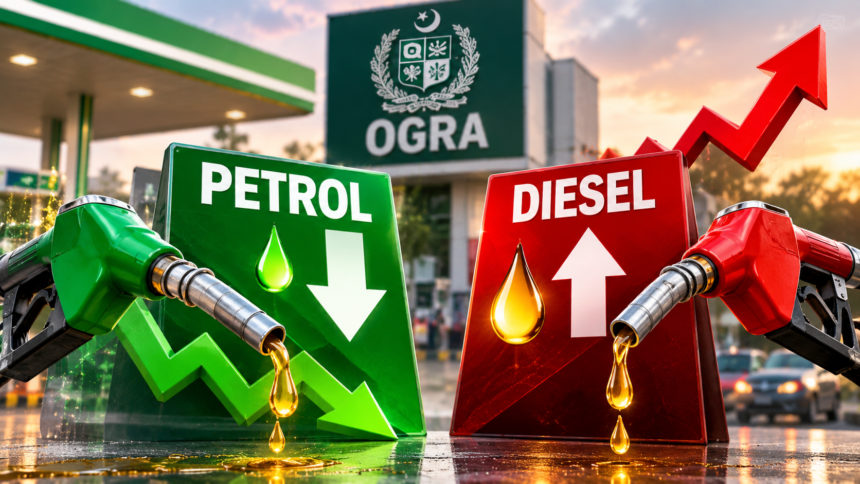
The federal government has adjusted fuel prices for the upcoming fortnight, delivering a minor relief to motorists while hitting the trucking and transport sectors with higher costs. Petrol prices dipped by Rs 1.86 per liter, but the price of high-speed diesel (HSD) climbed by Rs 3.32.
The move marks a departure from the recent trend of uniform price cuts, reflecting the volatility of global oil markets and the local impact of the Oil and Gas Regulatory Authority’s (OGRA) latest pricing mechanism.
For the average commuter, the reduction in petrol brings the new price to Rs 247.03 per liter. While any price drop is welcome, the Rs 1.86 reduction is marginal—barely enough to offset the persistent inflation in essential food items and electricity bills that continues to erode household purchasing power.
The real sting is in the diesel hike. Now retailing at Rs 251.29 per liter, the increased cost for HSD is expected to ripple through the supply chain. Diesel is the primary fuel for the country’s logistics network; when it gets more expensive, the cost of transporting everything from vegetables to construction materials follows suit.
“We are already operating on razor-thin margins,” said a representative from the All Pakistan Goods Transporters Association. “This increase isn’t just a number on a pump. It’s a direct hit to the cost of moving goods across provinces.”
The government’s pricing logic relies on the weighted average of global market fluctuations over the last 15 days. Officials maintain the adjustments are necessary to keep the state-run Pakistan State Oil (PSO) financially viable while meeting international obligations under current IMF-backed fiscal targets.
However, critics argue that the reliance on these fortnightly adjustments creates a climate of uncertainty for businesses. When fuel prices shift in opposite directions—petrol down, diesel up—it complicates long-term budgeting for commercial fleets and public transport providers alike.
The new rates took effect at midnight, with fuel stations across the country updating their boards to reflect the split trend. As the market digests these changes, the focus now shifts to whether the transport sector will pass these costs directly to the consumer at the checkout counter.