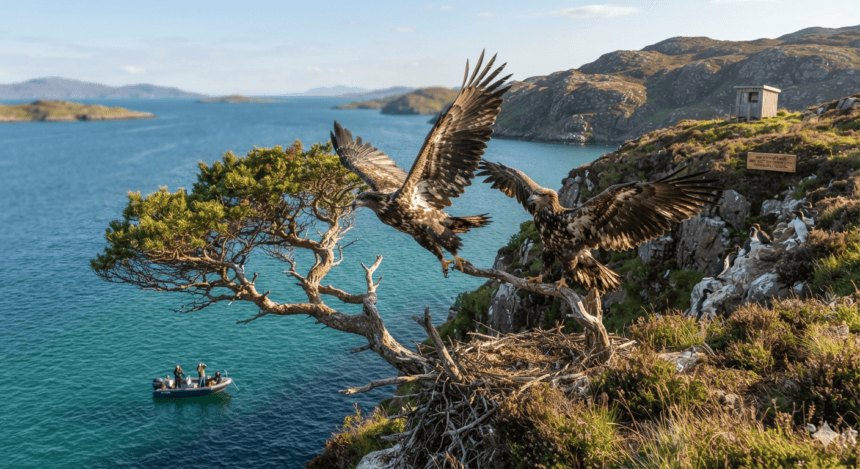
Three white-tailed eagle chicks have successfully fledged from their nest in Suffolk, marking the fourth consecutive year of breeding success for a species once extinct in England.
The youngsters took their first flights this week, a milestone confirmed by conservationists monitoring the site. The return of these “flying barn doors”—the UK’s largest bird of prey—continues a slow but steady recovery program that started with birds reintroduced from the Isle of Wight.
For the project team, this success isn’t just about the numbers. Each new fledgling represents a shift in the local ecosystem. The eagles, which boast a wingspan of up to eight feet, have spent the summer honing their hunting skills under the watchful eyes of their parents. They’ve been spotted patrolling local wetlands, causing a stir among the smaller resident raptors.
Critics of the reintroduction program have previously raised concerns regarding the impact on local livestock and game birds. To address this, the project team has implemented monitoring protocols, ensuring that the eagles’ diet remains primarily focused on fish and carrion. The data collected over these four years suggests that while the birds are opportunistic hunters, they haven’t caused the widespread agricultural disruption some had feared.
The parents of this year’s brood are seasoned veterans. They’ve navigated the challenges of a changing climate and shifting food availability, proving that these massive birds can adapt to the English landscape. Watching them dive for fish in the marshes provides a rare glimpse into a natural history that was largely lost to the British Isles over two centuries ago due to persecution and habitat loss.
As the chicks prepare to disperse later this autumn, they’ll face the most dangerous phase of their lives. Many juveniles don’t survive their first winter, as they struggle to find consistent food sources and navigate human-dominated landscapes.
For now, however, the sky over Suffolk remains a testament to a long-term conservation gamble that is finally paying off. The birds are flying, and for the fourth year in a row, the population is holding its own.