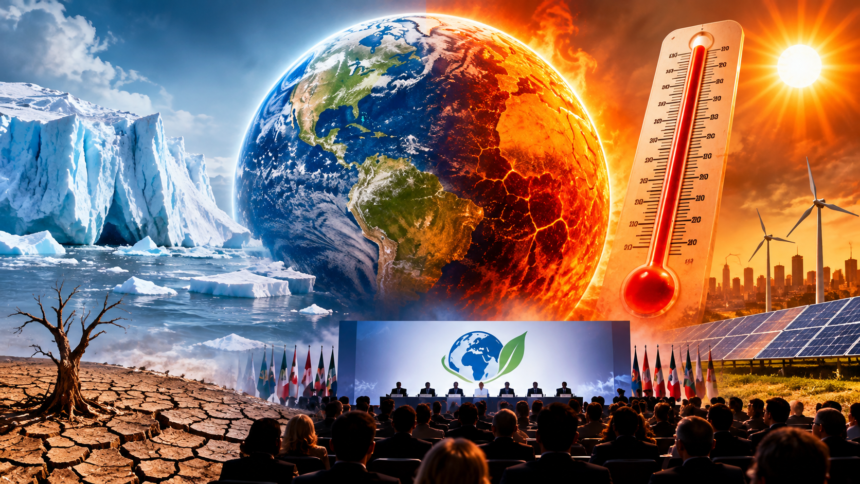
Global climate negotiators are gathering in Baku this week under the shadow of a grim forecast: 2026 is on track to become the hottest year in human history. Climate scientists point to a combination of persistent greenhouse gas emissions and the looming influence of shifting weather patterns, pushing global temperatures toward a threshold many hoped to avoid for at least another decade.
The news lands just as delegates arrive for the COP29 summit. The mission is clear—securing trillions in climate financing for developing nations—but the urgency is now measured in fractions of a degree. With 2024 and 2025 already testing the limits of the 1.5°C target set by the Paris Agreement, 2026 isn’t just another data point. It is a signal that the climate system is responding faster than existing models predicted.
“We are no longer talking about future risks,” said a lead researcher at the Copernicus Climate Change Service. “We are living through the baseline shift.”
The math behind the prediction is unforgiving. Oceans are retaining record levels of heat, and the absence of a cooling La Niña phase—which typically provides a temporary buffer against global warming—means the atmosphere has no natural brake. Scientists note that even a slight reduction in industrial output won’t offset the thermal inertia already baked into the system.
Critics of the current summit process argue that these record-breaking temperatures render the slow pace of diplomatic negotiations obsolete. While nations debate the fine print of emission reduction pledges, the physical reality on the ground—prolonged heatwaves in Asia, stalled monsoons, and record-low Arctic ice—is outstripping the policy response.
For the delegates in Baku, the pressure is existential. They aren’t just negotiating targets for 2030 or 2050 anymore; they are trying to manage the fallout of a world that is fundamentally changing in real-time. If the 2026 forecast holds, the final statement from this summit may be remembered less for its financial commitments and more for its failure to acknowledge the speed of the crisis.
The mercury is rising, and for the first time, the world’s leading climate models are struggling to find a ceiling.