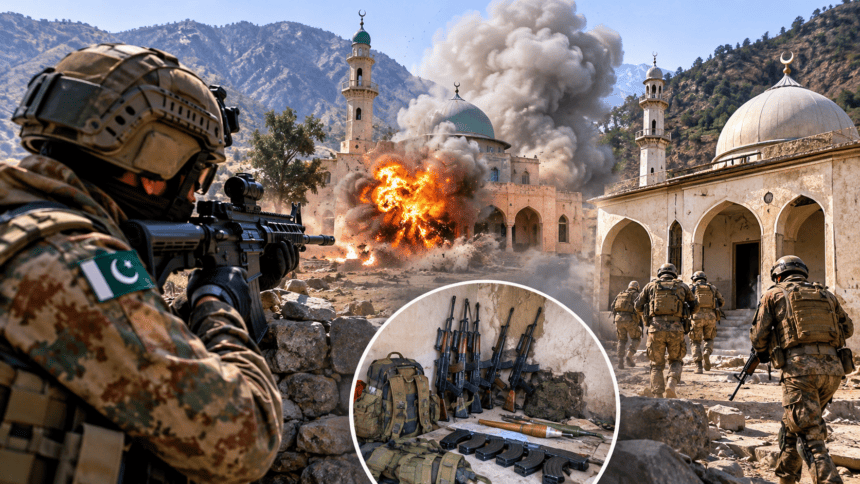
Security forces cleared two militant hideouts concealed within mosques in North Waziristan on Tuesday, according to the military’s media wing. The operation follows a surge in intelligence-led raids across the tribal district aimed at curbing the presence of banned outfits in sensitive locations.
The Inter-Services Public Relations (ISPR) confirmed the action, stating that the hideouts were being used as staging grounds for attacks on security personnel and local civilians. Troops recovered a cache of weapons, ammunition, and improvised explosive device (IED) components from the sites before securing the premises.
The use of religious sites for militant operations marks a shift in tactical concealment that has drawn sharp condemnation from local elders and provincial officials. By embedding themselves in community centers, militants aim to complicate military responses and force security forces into delicate urban engagements.
The operation comes as the state attempts to regain control over border regions that have seen a steady uptick in violence since the breakdown of ceasefires last year. Security analysts point to these raids as a sign that the military is moving away from large-scale kinetic operations toward precision strikes targeting specific insurgent infrastructure.
While the ISPR did not report any casualties among the security forces during the exchange, the discovery of IED material suggests these hideouts were meant to support active insurgent cells operating in the Mir Ali and Miranshah sectors.
Local sources report that cordons were established early in the morning, forcing a temporary lockdown in the immediate vicinity to prevent civilian exposure to the crossfire. The mosques remain under government supervision while authorities conduct a sweep for secondary devices or linked support networks.
Military commanders in the region have maintained that such operations will continue until the last of the sleeper cells are dismantled. With intelligence reports indicating ongoing recruitment drives in the area, the military now faces the challenge of securing the border without alienating the local population caught in the crossfire.