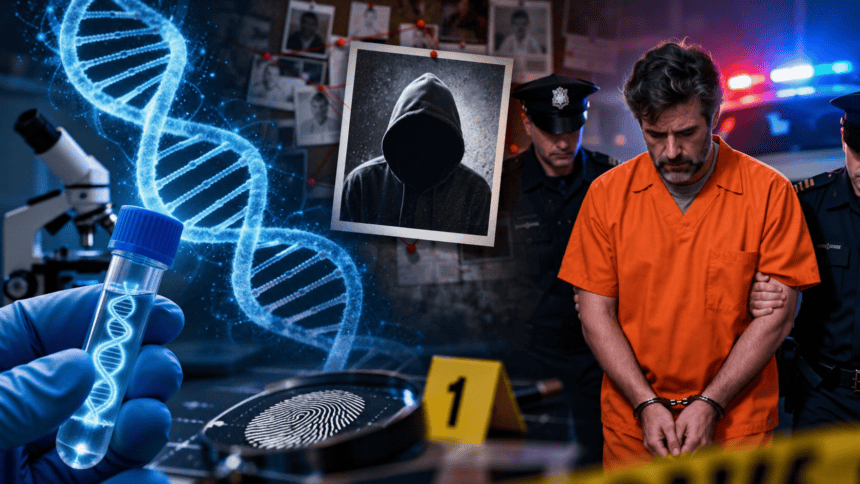
The killer left behind nothing but a discarded cigarette butt and a DNA profile that sat in a database for three decades. For investigators, it was a ghost. For the victim’s family, it was a source of agonizing uncertainty. Then, forensic genetic genealogy changed the math.
Detectives shifted their focus from the crime scene to the family tree. By uploading the suspect’s DNA to public genealogical databases, they didn’t look for a match—they looked for a cousin. They found a second cousin in a different state. That single link provided the branch they needed to climb down to the killer’s identity.
Genetic genealogy has effectively stripped away the anonymity that once protected criminals who committed offenses before the digital age. In this case, the process took months of meticulous work, sifting through census records, marriage certificates, and social media footprints to narrow down a suspect pool of hundreds to one man.
When investigators finally confronted the suspect, he didn’t confess immediately. He didn’t have to. The DNA technology had already done the heavy lifting. A warrant for a fresh sample provided the final, irrefutable link that matched the evidence found at the scene in the mid-1990s.
Critics raise valid concerns about privacy, pointing to the millions of people who have uploaded their DNA to ancestry sites without knowing their genetic data might one day become a digital dragnet for law enforcement. Yet, for survivors of cold cases, these databases are the only tool left when traditional police work hits a dead end.
The arrest has provided long-awaited answers, but it also signals a shift in criminal justice. The era of the “untraceable” killer is closing. As more people share their ancestry, the pool of potential genetic witnesses grows—meaning that for anyone who thinks they’ve outrun their past, their own family’s DNA might eventually be the thing that brings them home.