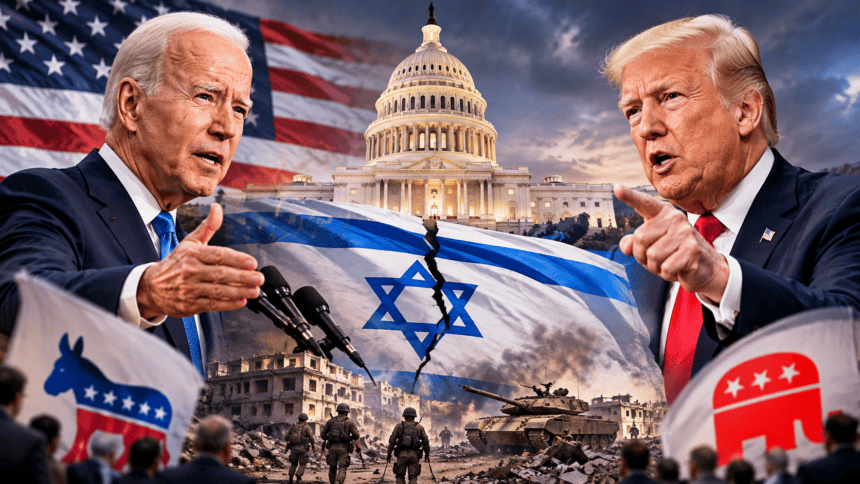
Washington is no longer a monolith on Israel. For decades, support for the U.S.-Israel alliance functioned as a bipartisan reflex, but that reflexive backing has shattered under the weight of the ongoing conflict in Gaza and shifting domestic political pressures.
Progressive Democrats are leading the charge for conditionality, arguing that American military aid cannot remain a blank check. They point to the humanitarian toll in Gaza as the primary driver. Rep. Pramila Jayapal and others have pushed for stricter adherence to international law, signaling that the traditional “ironclad” approach to military support is now a liability for many in their caucus.
Republicans, meanwhile, have pivoted to a different form of skepticism. While the party remains staunchly pro-Israel, a growing faction—aligned with the “America First” movement—is questioning the scale of foreign entanglements. These lawmakers aren’t motivated by humanitarian concerns; they are focused on fiscal restraint and domestic prioritization.
The shift is visible in recent floor votes and heated committee hearings. Where once a request for aid packages saw near-unanimous approval, recent debates have featured sharp, public disagreements over oversight and long-term strategy.
“We are seeing a fundamental realignment,” said a veteran congressional aide who works on foreign policy. “The instinct to defer to the Israeli government’s security assessment without question is gone. It’s been replaced by a demand for granular, verifiable reporting.”
The White House finds itself caught in the middle. President Biden’s administration continues to frame its support as essential, yet the political cost of that position is rising. Internal polling shows a widening gap between older party stalwarts and younger voters, the latter of whom are increasingly vocal about re-evaluating the U.S. role in the Middle East.
This isn’t just about the current administration. It’s a structural change in how Washington views its global commitments. The days of bipartisan consensus are being replaced by a fragmented, transactional approach where every dollar of aid and every diplomatic move is subject to intense, often hostile, domestic scrutiny.
As the legislative calendar pushes forward, the pressure to attach new strings to aid packages will only intensify. What was once a settled issue has become a volatile front in the American culture war—and for the U.S.-Israel relationship, the era of unquestioned support is effectively over.