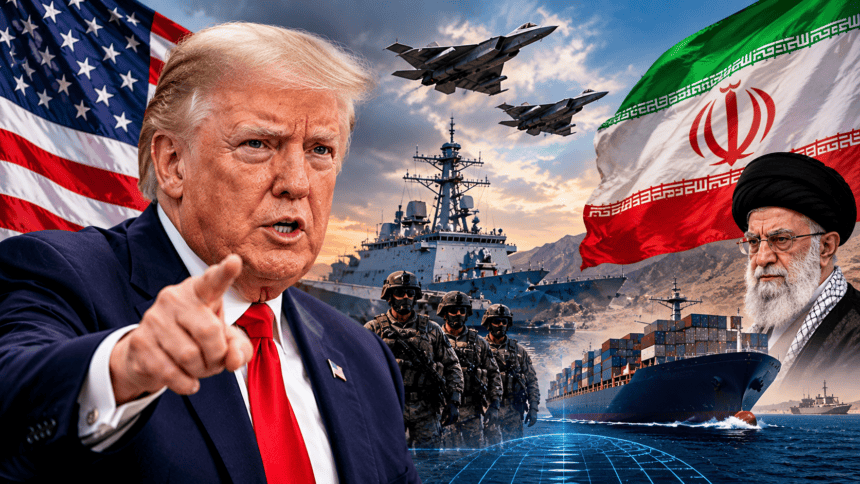
Donald Trump’s recent declaration that Iran is “sealed off” from the global economy marks a shift in rhetoric, but the reality on the ground remains a complex web of illicit trade. While the administration points to a new maritime task force as the primary tool for enforcement, military analysts and regional experts are questioning whether a single naval initiative can actually choke off a weapons flow that has evolved over decades.
The task force, centered on increased surveillance and interdiction in the Arabian Sea and the Gulf of Oman, aims to target dhows and commercial vessels suspected of ferrying Iranian-made missiles, drones, and small arms to regional proxies. It’s a classic cat-and-mouse game. Smugglers now rely on sophisticated GPS masking and “dark” ship-to-ship transfers that happen far from the reach of traditional patrols.
“Sealing off a country is a political term, not a logistical one,” said a retired naval commander familiar with regional operations. “You can tighten the net, but you aren’t going to stop a determined adversary from using small, fast-moving vessels that disappear into the thousands of miles of coastline.”
The administration’s strategy hinges on the assumption that increased pressure will force a strategic retreat from Tehran. Yet, history suggests otherwise. Sanctions and naval blockades have historically led Iran to diversify its logistics rather than abandon them. By utilizing flagged vessels from third-party nations and exploiting gaps in international maritime law, Iran has successfully maintained a lifeline to groups in Yemen, Lebanon, and Iraq despite years of intense scrutiny.
Critics of the current approach argue that the task force ignores the land-based smuggling routes that remain wide open. While the U.S. Navy watches the waves, heavy weaponry continues to move across porous borders in the Levant and the Caucasus. Focusing solely on maritime interdiction creates a visual of action without necessarily disrupting the supply chain at its source.
There is also the risk of escalation. Every boarding operation in contested waters carries the potential for a localized skirmish. If a U.S.-led team intercepts a vessel that Iran deems vital, the rules of engagement shift from policing to direct confrontation.
For now, the policy is clear: rely on the task force to project strength and signal that the “seal” is holding. Whether that projection translates into a measurable drop in weapons transfers is a different matter. The hardware is still moving, the proxies are still being armed, and the “sealed” border remains, in practice, a sieve.