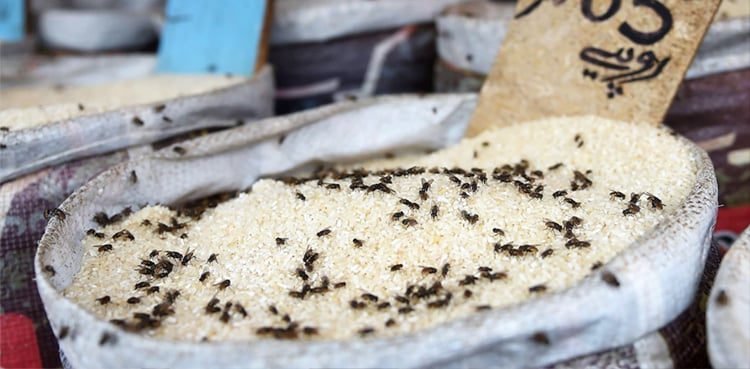
Following recent rainfall in Karachi, heaps of garbage and stagnant sewage water have accumulated across the city, leading to a massive fly infestation that has left citizens distressed.
Health experts have termed the fly outbreak extremely hazardous, stating that the problem worsens significantly during the summer season.
Public health expert Dr. Suleman Otho shed light on the rapid breeding of flies and the diseases they can spread. He noted that although thousands of fly species exist worldwide, Karachi has seen a surge not only in malaria and dengue mosquitoes but also in flies over the past few weeks, which are contributing to various health issues.
He explained that when flies sit on garbage or filthy surfaces, they collect germs on their wings and later transfer those germs to other areas especially food thereby contaminating it.
Dr.Suleman Otho emphasized that while chemical methods like insecticides or mechanical tools such as traps, sticky tapes, or electric grids can help kill flies, long-term solutions are only possible through improved sanitation and hygiene.
He suggested that municipal authorities should carry out IRS-M spraying in affected areas, which can effectively prevent fly and mosquito breeding for up to three months. Additionally, pouring any kind of oil over stagnant water can also hinder fly reproduction.
The overwhelming presence of flies in the city reflects the poor state of sanitation in Karachi.
It is the responsibility of all civic agencies to promptly collect waste within their jurisdiction and transport it to landfill sites.