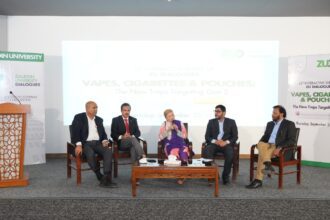

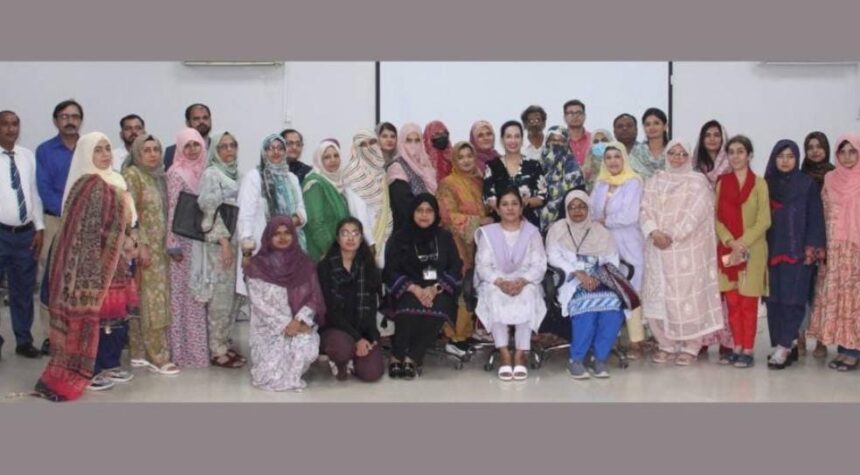
KARACHI: In a powerful reminder of how science and technology intersect with patient care, medical and clinical biochemistry experts gathered to emphasize that artificial intelligence (AI), nanotechnology, and advanced laboratory instrumentation are fundamentally transforming medical diagnostics and research. The remarks came during a one-day pre-conference workshop on “Emerging Trends in Medical Biochemistry”, organized by the Society of Medical and Clinical Biochemistry (SOMCB) Sindh Chapter at the Professional Development Center of Dow University of Health Sciences (DUHS), Karachi. The workshop was part of BIOCON 2025, SOMCB’s inaugural international conference to be held later this month at King Edward Medical University, Lahore.
Around 100 participants — including faculty, postgraduate scholars, and researchers from institutions across Sindh — attended the event. Represented were DUHS, Jinnah Sindh Medical University, Liaquat College of Medicine and Dentistry, Karachi Metropolitan University, Peoples University of Medical and Health Sciences for Women, Bahria University of Health Sciences, Baqai Medical University, Fazaia Ruth Pfau Medical College, Suleman Roshan Medical College, Jinnah Medical and Dental College, and Shaheed Mohtarma Benazir Bhutto Medical University.
In her welcome address, Prof. Dr. Zeba Haq (host and convener) noted that medical biochemistry underpins modern diagnostics and therapy, and that equipping professionals with insights into emerging technologies is a necessary step toward pushing the discipline forward. Prof. Dr. Jehan Ara Hassan, Pro-Vice Chancellor of DUHS and Chief Guest, added that workshops like this strengthen academic ties and motivate young researchers to link scientific innovation with tangible healthcare solutions.
Key workshop themes
The sessions spotlighted how AI, nanotechnology, and state-of-the-art lab tools are redefining medical biochemistry and diagnostics:
Bioinformatics and genetic diagnostics
Prof. Dr. Danish Hussain (Chair of Biochemistry, Dow Medical College) and Dr. Muhammad Bilal Azmi led a session on using bioinformatics algorithms to interpret genetic data, improving accuracy in diagnosing hereditary and metabolic disorders.
AI in biochemistry research
Dr. Nazish Waris from Baqai Medical University explained how machine learning models are now being applied to disease pattern recognition, biomarker discovery, and predictive modeling — emphasizing that AI is already active in labs, not just in theory.
Advanced instruments and lab methods
Dr. Nazakat Hussain Memon (Shaheed Mohtarma Benazir Bhutto Medical University, Larkana) discussed the adoption of microfluidics, spectrometers, high-throughput analyzers, and automation in modern biochemistry labs for faster, more precise results.
Nanotechnology in diagnostics and therapy
Dr. Saadia Qamar, a Postdoctoral Fellow at Bahria University, detailed how engineered nanoparticles, nano-biosensors, and drug delivery systems are being integrated into diagnostic assays, enabling earlier detection and more targeted treatment.
The workshop wrapped up with heartfelt thanks from Prof. Dr. Fauzia Imtiaz (Jinnah Sindh Medical University), and closing remarks by Prof. Dr. Zeba Haq, who stressed that ongoing institutional collaboration is essential to sustain innovation in medical biochemistry.
BIOCON 2025, organized by SOMCB, aims to foster interdisciplinary excellence and dialogue on emerging trends in biochemistry, clinical diagnostics, and research, making it one of Pakistan’s most anticipated scientific congregations.