
ISLAMABAD: The Supreme Judicial Council (SJC) has approved major amendments to the code of conduct for judges, formally prohibiting any media engagement or political commentary in a move aimed at reinforcing judicial neutrality and integrity.
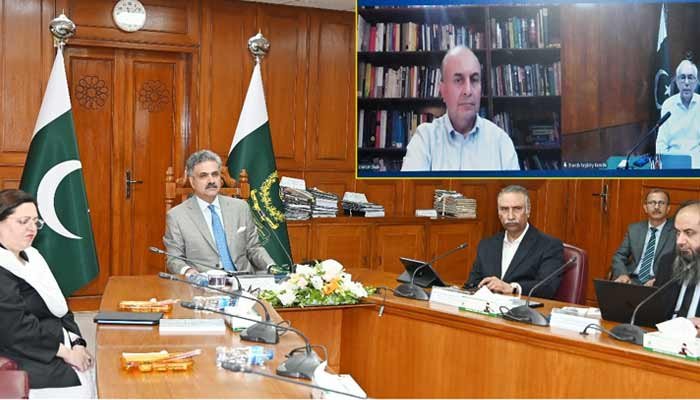
The meeting of the SJC was chaired by Chief Justice of Pakistan (CJP) Yahya Afridi at the Supreme Court, and attended virtually by Justice Syed Mansoor Ali Shah and Justice Munib Akhtar, while Lahore High Court Chief Justice Aalia Neelum and Islamabad High Court Chief Justice Sardar Muhammad Sarfraz Dogar participated in person.
According to the amended code, a judge must not engage in public controversy “whether by way of speech, writing, debate or comment at any forum — and least of all on political questions, even if such questions involve a point of law.”
The SJC further directed that judges shall not interact with the media, particularly on matters that may “provoke public debate” or “affect institutional harmony and discipline.”
The revised guidelines reverse amendments introduced during former CJP Qazi Faez Isa’s tenure, which had allowed judges to publicly respond to allegations.
A newly added Article 15 mandates that any judicial response to public criticism must be submitted in writing to a committee — comprising the CJP and four senior judges — through the Supreme Court Registrar for an institutional reply.
The article also obliges judges to perform duties on merit, uphold intellectual independence, and resist internal or external pressures. Any attempts to influence judicial proceedings must be reported in writing to the CJP and senior judges.
In another key revision, Article 13 bars judges from directly soliciting or accepting invitations from foreign or international organisations. Such invitations must be routed through the concerned chief justice for approval. The SJC clarified that independently seeking such invitations would constitute misconduct.
The changes aim to “preserve the dignity, impartiality, and integrity of the judiciary,” according to the Council’s statement.
SJC reviews 67 complaints
During the same meeting, the SJC reviewed 67 complaints filed under Article 209 of the Constitution. Of these, 65 were dismissed, one deferred, and one forwarded for further action.
Separately, the reconstituted Council examined seven additional complaints — five were dismissed, while two were referred for further proceedings.
Following Saturday’s meeting, the SJC said it has now handled 155 complaints since October 2024, with 87 cases still pending initial consideration.