REYKJAVIK — In the shadow of the Snaefellsnes Peninsula, where the North Atlantic churns against jagged volcanic rock, a small group of observers gathered this week not just for the celestial spectacle, but for the sea cucumbers.
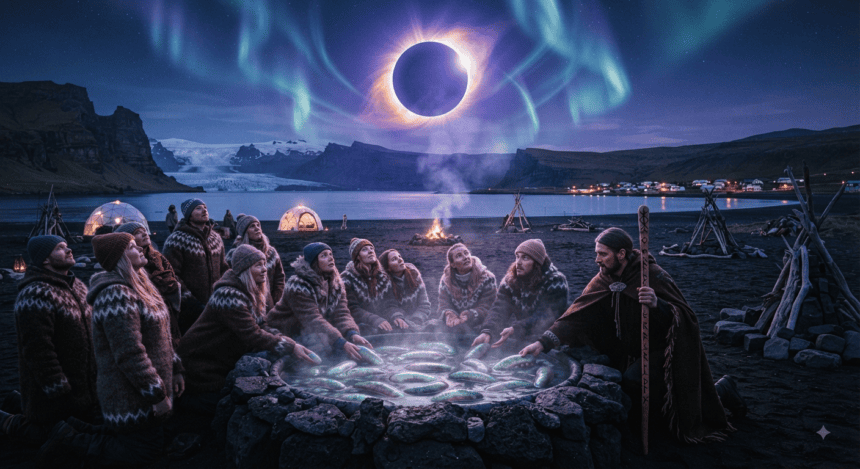
The festival, held under the ethereal light of a partial eclipse, drew a mix of local conservationists, artists, and self-described “ocean mystics.” While the rest of the world looked up to track the moon’s path across the sun, this crowd focused its lens on the tide pools. They weren’t just watching the eclipse; they were performing what they called a “planetary ritual” for the health of the local marine ecosystem.
“The sea cucumber is the lungs of the ocean floor,” said Elena Varg, an organizer who spent the morning documenting the slow-moving echinoderms near the shoreline. “We aren’t asking for anything for ourselves. We’re asking for the sky to show some generosity to the things that can’t look up.”
The event marks a growing trend of “eco-spiritual” gatherings in Iceland, where the boundary between environmental activism and folklore has always been porous. Participants spent hours arranging stones in patterns that mirrored the eclipse’s progression, waiting for the moment of maximum coverage to offer a collective, silent plea for the recovery of local sea cucumber populations, which have faced pressure from shifting water temperatures.
Critics might dismiss the gathering as New Age theater, but for those on the beach, the stakes feel grounded in reality. Iceland’s marine biodiversity has been under scrutiny as warming currents disrupt traditional habitats. While scientists gather data through sonar and water samples, this group argues that public engagement—even through unconventional rituals—is a necessary catalyst for policy change.
“You can have all the scientific reports in the world,” Varg said, gesturing toward the cold, grey water. “But if people don’t feel a visceral, almost spiritual connection to the creature, they won’t fight for its survival when the funding cuts come.”
The eclipse provided more than just a backdrop; it offered a rare moment of synchronized attention. As the sky dimmed and the temperature dropped, the shoreline fell into a silence that felt heavy. There were no speeches. There was no protest signage. Just a few dozen people, shivering in the Icelandic wind, watching the tide pools as the sun vanished.
By the time the light returned, the ritual was finished. The participants packed up their gear, leaving no trace on the volcanic sand. Whether the “generosity from the sky” will manifest in the form of healthier tides or policy shifts remains an open question. For now, the sea cucumbers remain on the ocean floor, indifferent to the celestial alignment—but briefly, at least, they were the center of the world.