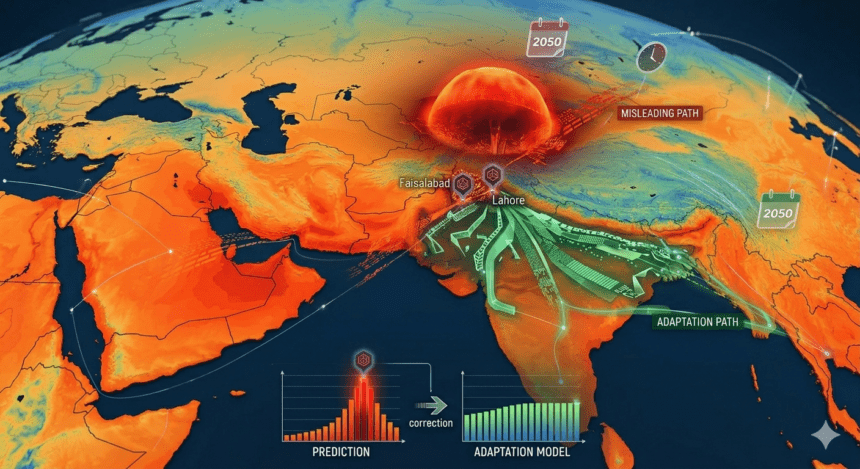
Recent claims suggesting that Lahore and Faisalabad are on track to become among the world’s hottest cities by 2050 have been described as misleading by climate experts and researchers.
According to specialists, while both cities are expected to experience rising temperatures and more frequent heatwaves due to climate change, there is no conclusive evidence proving that they will rank among the hottest cities globally by 2050. Such projections often rely on selective data or simplified interpretations of complex climate models.
Experts explain that future climate conditions depend on multiple factors, including global greenhouse gas emissions, urban development, population growth, and local adaptation measures. As a result, predicting exact rankings decades in advance is difficult and should be treated with caution.
Researchers acknowledge that Pakistan remains highly vulnerable to climate change and extreme weather events. Increasing temperatures, prolonged heatwaves, and water stress are expected to pose serious challenges for major urban centers, including Lahore and Faisalabad.
Climate scientists stress the importance of focusing on preparedness and adaptation rather than relying on sensational claims. They encourage governments and communities to invest in heat-resilient infrastructure, green spaces, and sustainable urban planning to reduce the impact of rising temperatures.