“Global Forests Burning Hotter Than Ever”
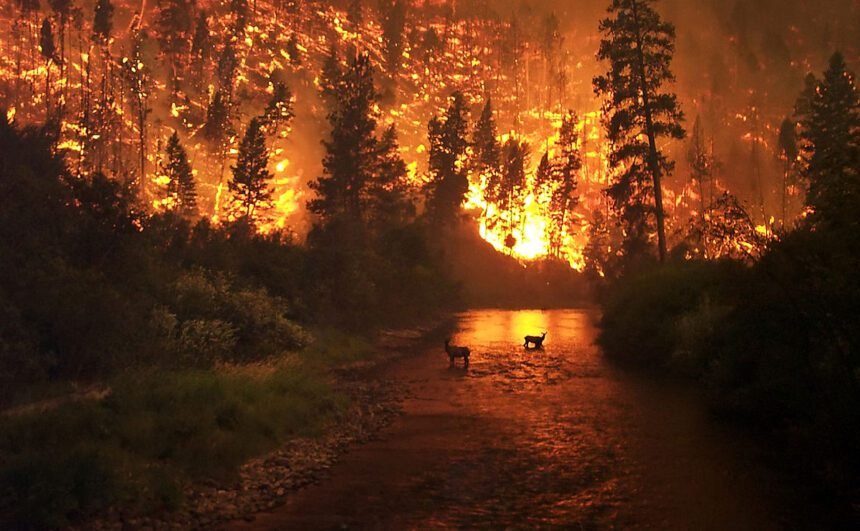
Forest fires are getting worse across the world, with scientists linking the rise to climate change. A new study reveals that extreme fire weather conditions hot, dry, and windy spells have become more common, doubling the chances of large forest fires compared to the preindustrial era.
In 2023 and 2024, which were the hottest years on record, over 78 million acres of forests burned globally. These fires released billions of tons of carbon dioxide and caused severe air pollution, affecting millions of people.
According to recent research published in Nature Communications and PNAS, the main reason behind the increasing severity of wildfires is climate change. These studies found that:
- Forest canopy loss in 2023-24 was double compared to the last two decades.
- Boreal forests lost twice as much tree cover.
- Tropical forests lost three times as much.
- North American forests, mainly in Canada, lost nearly four times more due to widespread wildfires.
Unlike grasslands or savannas, where fire activity is declining due to land conversion, forest fires are on the rise. Especially in remote forests far from human activities the fires are being driven by climate conditions, not human interference.
Experts say the cause is clear: longer, drier, hotter periods increase the risk of fire. Known as fire weather, these conditions make forests extremely flammable. Wind patterns can further spread the flames rapidly across landscapes.
“Climate change is clearly driving extreme fire seasons like we’ve seen,” said climate scientist John Abatzoglou.
The studies used satellite images and fire data from 2002 to 2024 to assess how forests have changed. Fires in remote areas show the strong fingerprint of climate change, according to fire geographer Dr. Calum Cunningham.
The rising fire activity not only damages forests but also makes firefighting harder. When multiple countries face fire emergencies at the same time, it stretches resources thin, reducing the global capacity to respond.
Researchers also warn that cuts to scientific funding, policy rollbacks, and reduced satellite monitoring could make fire prediction and prevention even more difficult in the future.
Scientists agree.climate change is no longer a background factorit’s a key driver of today’s forest fire crisis. Without urgent global action, the situation may worsen further, endangering ecosystems, air quality, and climate stability.