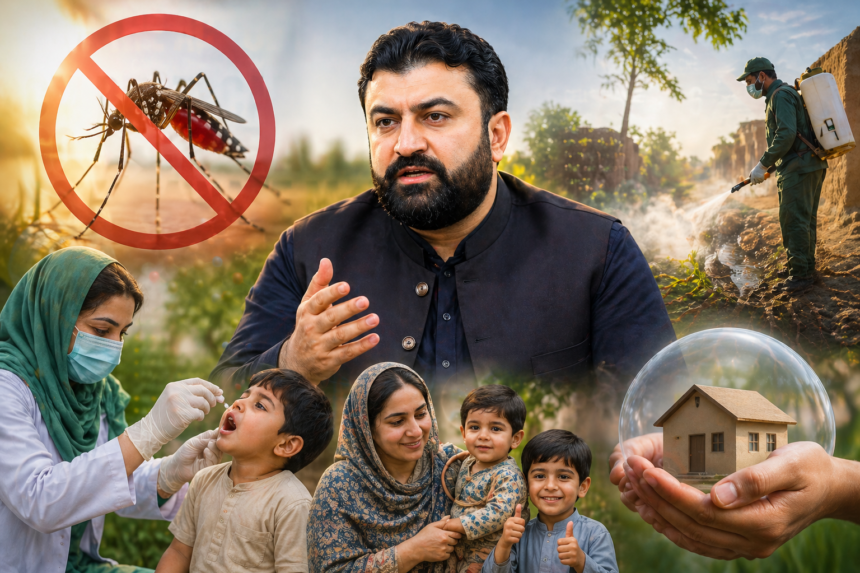
Balochistan Chief Minister Sarfraz Bugti marked World Malaria Day by demanding an immediate, province-wide mobilization to eradicate the mosquito-borne disease. He signaled a shift from reactive healthcare to a proactive, surveillance-based model.
The province faces a persistent malaria burden, exacerbated by fragile infrastructure and seasonal flooding that creates stagnant breeding grounds. While health departments often focus on seasonal distribution of bed nets, Bugti’s administration is now pushing for a more integrated approach involving local government and district administrations.
“We cannot rely on sporadic campaigns when the threat is constant,” Bugti said during a briefing with health officials. He urged for the strengthening of diagnostic centers in remote districts, where lack of access often turns treatable cases into emergencies.
The strategy hinges on two fronts: aggressive vector control and public awareness. Health experts have long pointed out that while malaria is preventable, rural Balochistan suffers from a critical gap in community-level monitoring. Bugti’s directive aims to bridge this by tasking deputy commissioners with overseeing local sanitation drives, specifically targeting water-logging in high-risk zones.
Despite increased funding in recent years, the province’s malaria incidence remains tied to environmental factors and poor drainage in urban centers like Quetta. Public health analysts note that without fixing the underlying sanitation issues, short-term medical interventions act only as a temporary buffer.
The Chief Minister’s call for “collective action” suggests a departure from siloed health policy. By involving local municipalities in sanitation management, the provincial government hopes to reduce the reliance on secondary care facilities. Success, however, will depend on whether the administration can maintain the momentum beyond the international awareness day.
For residents in the province’s southern belt, where the disease is endemic, the shift in policy represents a race against the upcoming monsoon season.