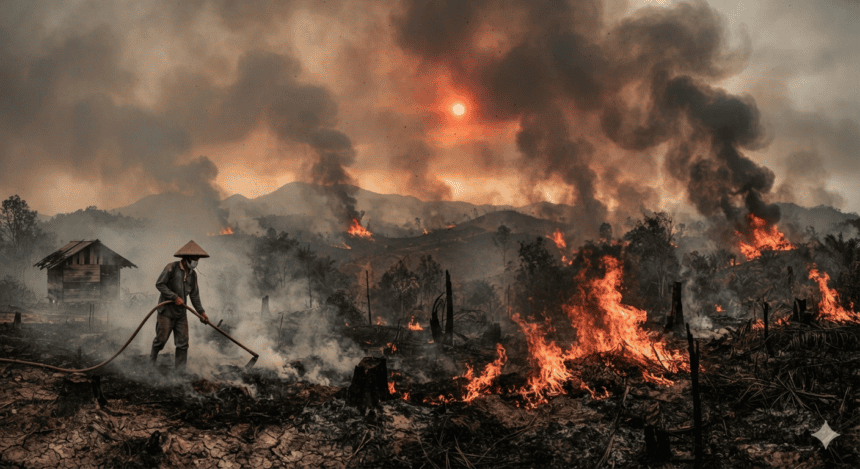
Indonesia’s annual fire season has shifted from a predictable cycle to an acute crisis. Driven by the return of the El Niño weather pattern, the country’s peatlands and forests are drying out, creating a tinderbox for the massive wildfires now tearing through Kalimantan and Sumatra.
The climate phenomenon is suppressing rainfall across the Indonesian archipelago, extending the dry season well beyond its usual window. Meteorologists are tracking a significant drop in soil moisture levels, which for the country’s vast peatlands, acts as a trigger for subterranean fires. These fires are notoriously difficult to extinguish, often smoldering underground for months and releasing toxic, carbon-heavy haze into the atmosphere.
The economic and health stakes are rising. In 2015 and 2019, similar El Niño conditions led to catastrophic fire outbreaks that cost Indonesia billions in GDP and triggered respiratory crises for millions of citizens across Southeast Asia. Hospitals in regions like West Kalimantan are already reporting an uptick in patients suffering from acute respiratory infections as air quality indices hit “unhealthy” levels.
“The landscape is already brittle,” says an environmental researcher monitoring provincial satellite data. “We aren’t just looking at isolated incidents; we are looking at a system that has lost its natural buffer against heat.”
Government agencies are currently deploying water-bombing helicopters and thousands of personnel to hotspot zones. Yet, officials acknowledge that human intervention is struggling to keep pace with the sheer scale of the drying forest floor. While the government claims to have improved fire-prevention protocols since the last major event, critics argue that the enforcement of land-clearing bans remains inconsistent, particularly among small-scale palm oil operators who continue to use fire as a cheap method to clear brush.
The fires represent a double-edged sword for the global climate. As these peatlands burn, they release massive stores of sequestered carbon, effectively undoing years of international reforestation efforts.
With the El Niño peak expected to persist through the coming months, the window for effective containment is closing. Whether this year’s fire season becomes a regional disaster or a manageable emergency now depends entirely on the intensity of the incoming monsoon rains—and whether they arrive in time to douse the flames before they reach the deepest, most volatile peat layers.