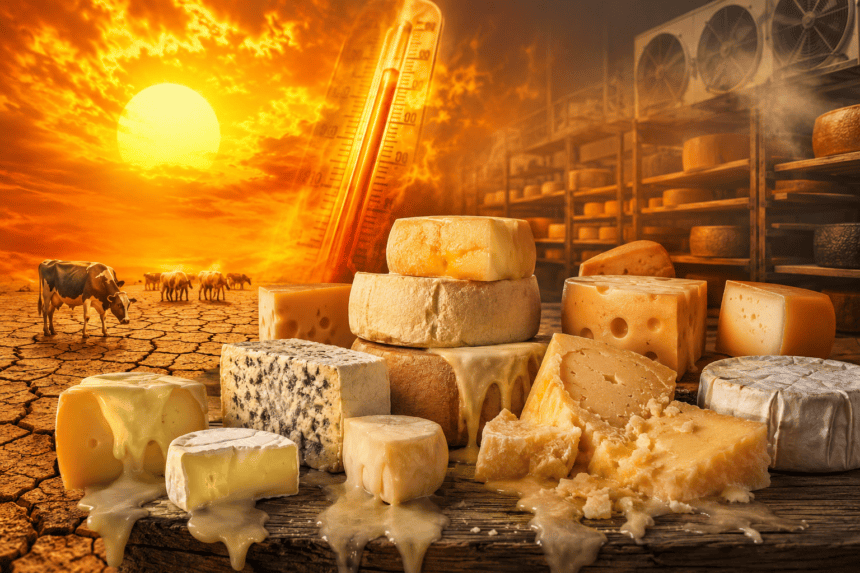
The world’s cheese supply is hitting a breaking point. Sustained heatwaves across Europe and North America are forcing dairy farmers to cut production, as stressed cows yield less milk and the high cost of cooling stalls operations.
It isn’t just about the temperature; it’s about the biology. Cows are highly sensitive to heat stress. When temperatures climb above 75°F (24°C), milk production drops sharply. Farmers in Italy and France — regions crucial to the global supply of premium aged cheeses — report that their herds are eating less and producing thinner, lower-quality milk.
“The cows are simply exhausted,” said Marc Dubois, a dairy cooperative manager in the Auvergne region. “When the nights don’t cool down, the animals never recover. They aren’t producing the volume we need to keep the vats full.”
The impact is hitting the bottom line. As milk supplies tighten, the price of raw ingredients for cheese-makers has surged. Smaller, artisanal producers are feeling the squeeze the hardest. They lack the capital to invest in the industrial-scale climate control systems used by larger conglomerates, leaving their aging cellars vulnerable to fluctuations that can ruin a batch of cheese overnight.
Global market data shows wholesale cheese prices have risen by nearly 15% compared to the same period last year. Retailers are passing those costs directly to shoppers. Some major distributors in the U.S. have already begun limiting orders for specialty imports, prioritizing high-turnover products over niche varieties that require longer, more expensive aging processes.
This isn’t a temporary spike. Agricultural experts point to a shift in climate patterns that makes long-term planning nearly impossible for dairy farmers. If the current trend holds, the industry faces a structural change: moving away from traditional, pasture-based farming toward indoor, climate-controlled facilities.
For the consumer, the era of affordable, high-quality variety may be ending. The next time you reach for a wedge of aged cheddar or a block of authentic Parmigiano, the price tag will likely reflect a reality where the weather, not just the craft, dictates the supply.