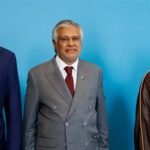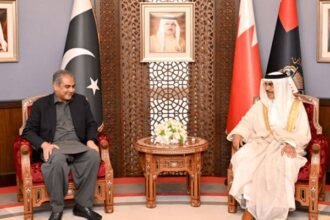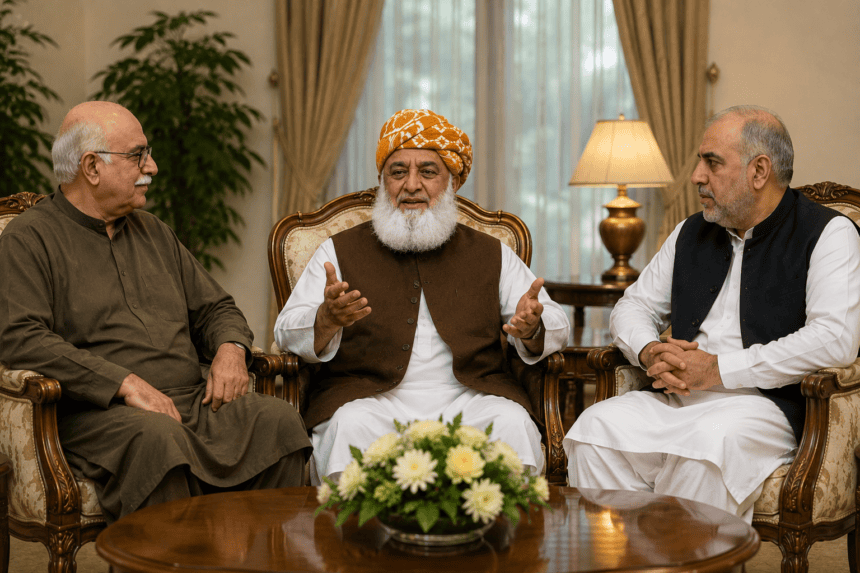
Jamiat Ulema-e-Islam-Fazl (JUI-F) chief Maulana Fazlur Rehman has initiated a fresh push to consolidate opposition ranks, meeting with Pashtunkhwa Milli Awami Party (PkMAP) head Mehmood Khan Achakzai and PTI leader Asad Qaiser in Islamabad. The meeting, held at the JUI-F leader’s residence, marks a pivotal shift in the parliamentary landscape as the veteran politician seeks to bridge the gap between disgruntled political factions.
The move comes as the current government faces mounting pressure over economic instability and questions regarding the legitimacy of the electoral process. By bringing together figures from across the ideological spectrum, Fazl is signaling that the era of political isolation for the PTI may be drawing to a close.
“We are building a consensus to protect the sanctity of the constitution and the vote,” a source familiar with the meeting said. The participants reportedly discussed a joint strategy to challenge the government in parliament, focusing on common grievances regarding the recent general elections and the state of the judiciary.
For the PTI, the outreach is a lifeline. Asad Qaiser’s presence underscores the party’s willingness to look past historical rivalries to gain a foothold against the incumbent coalition. Achakzai, acting as a bridge between the religious right and the populist movement, has been vocal about the need for a “unified opposition” to restore what he terms “democratic norms.”
The challenge for this nascent coalition remains the deep-seated mistrust between the parties involved. While Fazl’s influence in the religious vote bank is undisputed, his past alliances with the ruling parties have left many within the PTI rank and file skeptical of his long-term commitment.
Despite these internal frictions, the optics of the meeting are unmistakable. The opposition is moving away from fragmented protests toward a coordinated legislative and political front. Whether this alliance can survive the pressures of backroom deal-making or if it will fracture once the government offers concessions remains the central question.
For now, the message from the meeting is clear: the opposition is finally deciding to act in concert. How the government responds to this unified front—and whether they choose to engage or confront—will define the political temperature in the capital for the coming months.