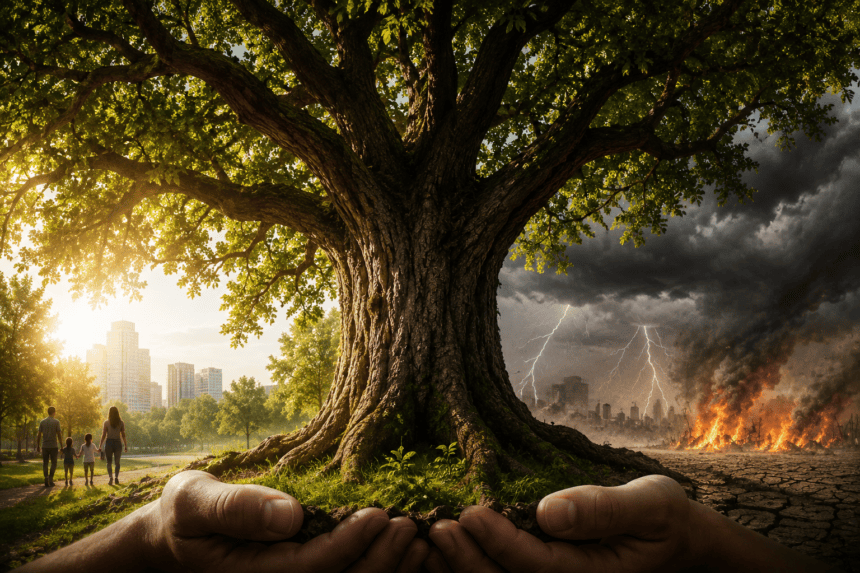
City planners have long looked to concrete cooling solutions to combat rising urban temperatures, but the most effective tool is already standing. Research confirms that protecting mature, old-growth trees provides a level of heat mitigation that new saplings simply cannot replicate.
As record-breaking heatwaves batter urban centers, the disparity between neighborhoods with canopy cover and those without has turned into a matter of life and death. Older trees, with their massive root systems and expansive leaf structures, act as natural air conditioners. They don’t just provide shade; they release moisture into the atmosphere, a process called transpiration that can drop local temperatures by several degrees.
A single mature oak or sycamore can provide the cooling power of ten smaller, younger trees. When developers clear-cut old-growth lots to make room for high-density housing, they aren’t just removing wood—they are dismantling a cooling infrastructure that takes decades to replace.
“We keep planting thin whips of trees and calling it reforestation,” says Dr. Elena Rossi, an urban ecologist who tracks heat islands in metropolitan areas. “A sapling isn’t a replacement for a 60-year-old canopy. It’s like trying to replace a hospital with a first-aid kit.”
The data backs her up. Neighborhoods stripped of mature trees often register temperatures five to eight degrees higher than leafy, historic districts during peak summer heat. For the elderly and those with respiratory issues, that gap is the difference between a manageable afternoon and a medical emergency.
Despite this, zoning laws in many cities prioritize rapid development over the preservation of existing greenery. Builders often argue that saving massive trees adds costs and complicates site logistics. Yet, the long-term public health costs—higher energy bills, increased heat-stroke admissions, and accelerated road degradation—far outweigh the savings of a clear-cut lot.
Some cities are finally shifting their approach. Progressive ordinances now mandate that developers include “heritage tree” preservation plans before breaking ground. It’s a move that forces a change in design rather than a change in landscape.
The strategy is simple: stop viewing trees as decorative assets and start treating them as vital public health infrastructure. Until that shift happens, the concrete continues to hold heat, and the most vulnerable residents remain in the crosshairs of a warming climate.