First Major Cold Spell Unveils Magical Icy Blooms Known as Frost Flowers
The first significant cold wave of the season in the U.S. has created not just snow and freezing temperatures, but also a rare and enchanting phenomenon: frost flowers. These delicate ice formations, appearing early in the morning after hard freezes, capture the attention of nature lovers and photographers alike.
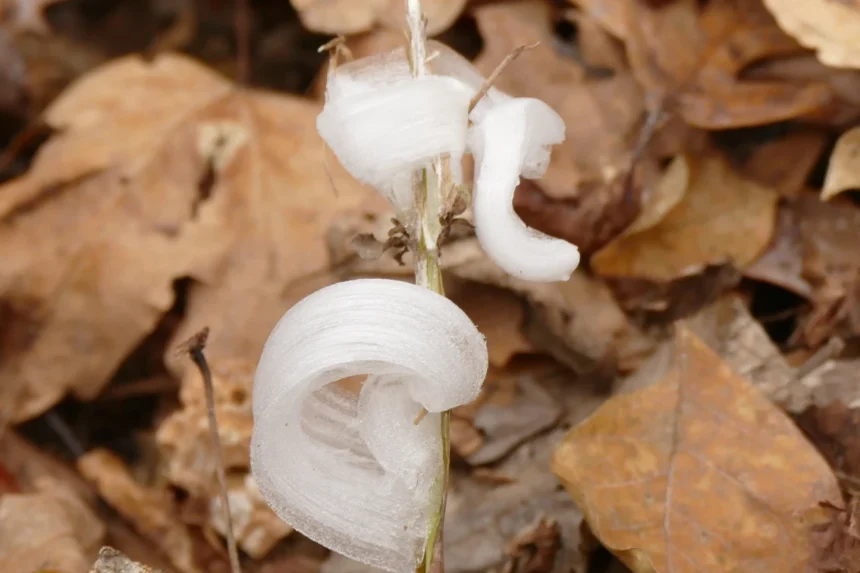
Frost flowers are formed when thin layers of ice are extruded from the stems of certain plants, curling into intricate, ribbon-like shapes. They appear only for a short period before melting under sunlight, making them a fleeting natural spectacle. (Alan Templeton/AP)
This week, states including Indiana, Missouri, Tennessee, and other parts of the U.S. East experienced temperatures low enough to trigger the formation of frost flowers.
The formations often resemble cotton candy clouds or delicate spun glass, captivating anyone lucky enough to witness them in early morning hours.
Social media platforms were filled with images of untouched fields and backyards decorated with these icy blooms shortly after the freeze, as photographers raced to capture their ephemeral beauty.
Frost flowers form when moisture inside plant stems is pushed out as ice through cracks in the outer layer. The freezing process shapes the ice into ribbons that curl and twist into intricate patterns. This delicate phenomenon is extremely sensitive — a single touch can destroy it, and sunlight melts the ice within hours.
For many, spotting frost flowers is a sign of the approaching winter, encouraging early morning walks and photography.
The delicate beauty has also become a popular seasonal attraction, drawing nature enthusiasts and hobbyist photographers to frozen fields across affected states.
It highlights the fragility and fleeting nature of certain natural phenomena, reminding people of the importance of appreciating seasonal wonders before they vanish.
Frost flowers are most common in areas of the U.S. where hard freezes occur regularly, typically the upper half of the Eastern states. Their appearance marks the transition from autumn to winter and is often celebrated as a natural spectacle before the harsher conditions of full winter set in.
While snow and freezing temperatures dominate the headlines, phenomena like frost flowers offer a magical glimpse into nature’s artistry. Brief, fragile, and beautiful, these icy blooms are a reminder that even the coldest mornings can bring a moment of wonder.