The world’s oceans are hotter than they have ever been since satellite records began. Surface temperatures have breached historic thresholds for over a year, with the current El Niño event acting as a force multiplier for a planet already struggling with trapped greenhouse gases.
Data from the Copernicus Climate Change Service confirms that sea surface temperatures reached an average of 21.06°C in February—the highest monthly figure on record. This isn’t just a statistical anomaly; it is a fundamental shift in the earth’s heat-absorption capacity.
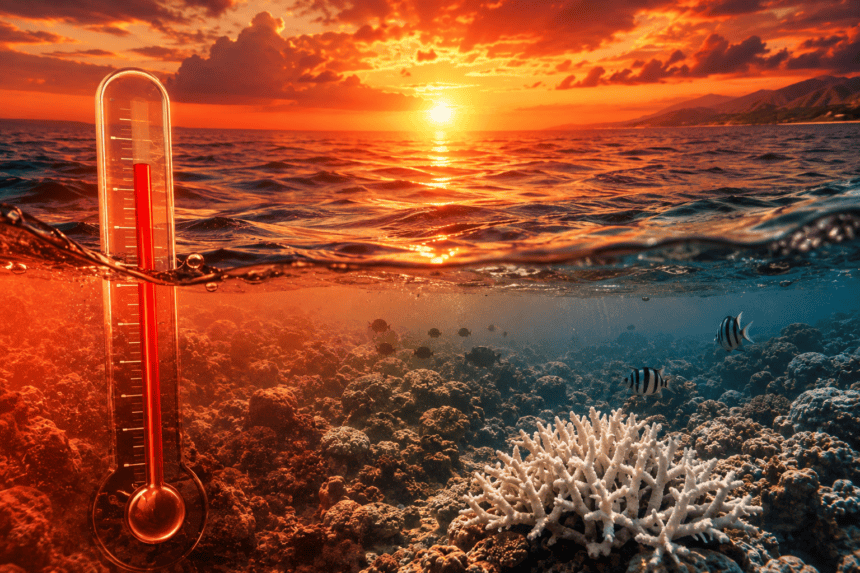
The oceans act as the planet’s primary heat sink, absorbing roughly 90% of the excess energy trapped by human-caused carbon emissions. When that sink saturates, the consequences ripple outward. Marine heatwaves are currently stripping coral reefs of their color and health, while shifting currents are forcing commercial fish stocks into deeper, cooler waters—upending local economies that rely on predictable seasonal harvests.
“We are seeing a systemic failure in the cooling mechanisms of our oceans,” says Dr. Michael Mann, a climatologist tracking the trend. “The heat we see today isn’t just a byproduct of El Niño; it’s a direct consequence of a baseline that has been raised by decades of fossil fuel reliance.”
While El Niño typically brings warmer water to the surface of the Pacific, the current spike is global. From the North Atlantic to the Indian Ocean, the heat is persistent. This year-long streak of record-breaking temperatures suggests that the ocean’s ability to “buffer” the climate is reaching a breaking point.
The immediate impact is already visible. Warmer waters fuel more intense tropical storms, providing extra energy that turns standard cyclones into rapid-intensifying monsters. For coastal communities, this translates to higher sea levels and more destructive storm surges.
Scientists remain concerned that even if the current El Niño fades, the underlying “heat budget” of the oceans will not reset to previous levels. The energy is already stored. As the climate enters a new, warmer phase, the question is no longer whether the oceans will hit another record, but how quickly the next one will arrive.