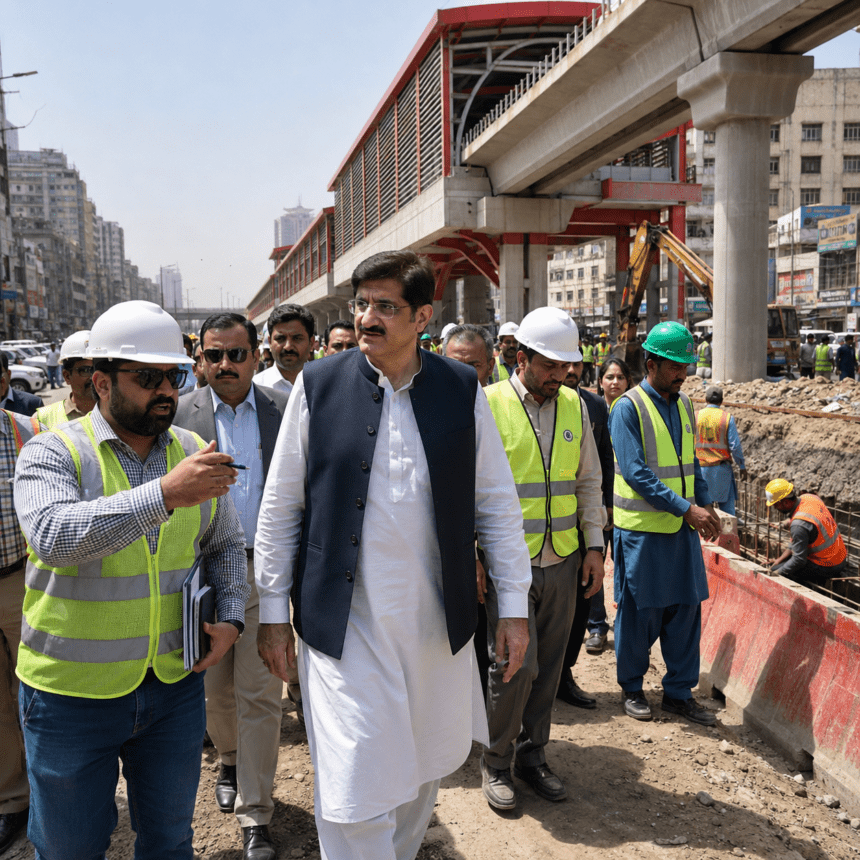
Sindh Chief Minister Murad Ali Shah spent his Tuesday morning on the ground, inspecting the stalled construction of the Bus Rapid Transit (BRT) Red Line and the surrounding arterial roads that have turned into a daily nightmare for Karachi commuters.
The project, which promised a modern transit solution for the city’s dense eastern corridor, remains years behind schedule. Shah’s visit to the University Road site wasn’t just a walkthrough; it was an attempt to break the gridlock between the project’s contractors and the utility agencies that have repeatedly delayed utility relocation.
“We cannot leave the public at the mercy of unending construction,” Shah told officials on-site. He directed the transport department to expedite the work on the corridor’s main track, specifically focusing on the stretch near NIPA and Safoora Goth, where dust and open trenches have crippled local businesses and traffic flow for months.
The Red Line—designed to be Asia’s first bio-methane-powered bus system—has faced a litany of hurdles. Utility shifting, funding snags, and coordination gaps between the Karachi Metropolitan Corporation (KMC) and the Sindh government have left the road network in a state of perpetual disarray.
Shah ordered the local government secretary to ensure that the adjacent service roads are leveled and paved within the next ten days. He noted that while major infrastructure takes time, the “day-to-day misery” of road users is no longer acceptable.
Contractors were warned that further delays would lead to penalties. Whether these directives translate into asphalt on the ground or remain mere talking points in a briefing room is the question lingering over the city’s crumbling transport infrastructure.