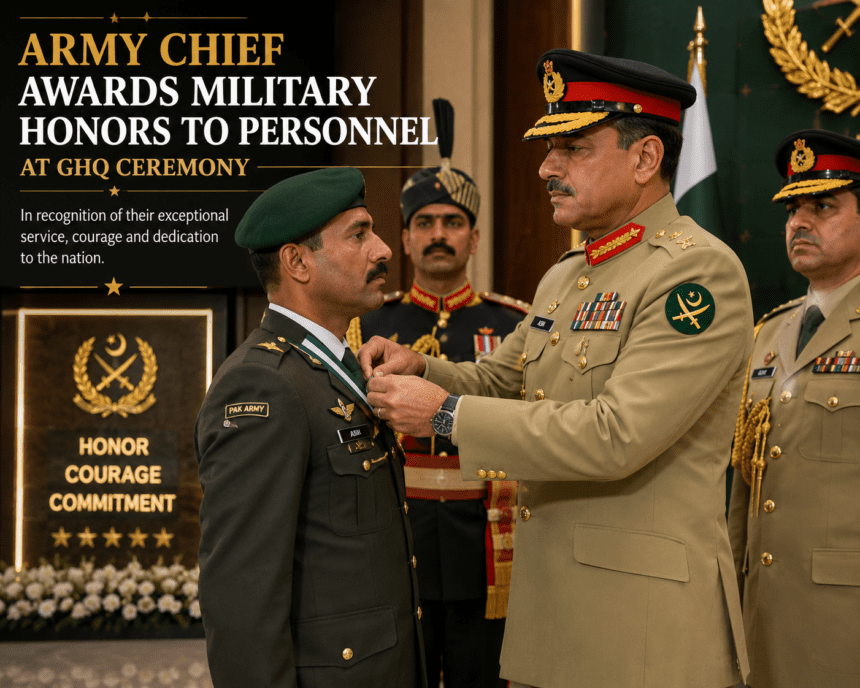
RAWALPINDI — Chief of Army Staff General Asim Munir conferred military awards upon officers and soldiers at a ceremony held at General Headquarters on Thursday. The event recognized personnel for their acts of gallantry and distinguished service during operations.
Medals were pinned on recipients who demonstrated exceptional courage in the line of duty. The ceremony, a staple of military tradition, serves to acknowledge the risks taken by those serving in volatile regions, particularly along the borders and in counter-terrorism theaters.
General Munir met with the families of the awardees, many of whom traveled from across the country to attend. For the families of those receiving posthumous awards, the day carried a somber weight. The Army Chief spent time speaking with the relatives, acknowledging that the recognition of service is a debt the institution owes to those who bear the ultimate cost.
The awards span various categories, including the Tamgha-i-Imtiaz and Sitara-i-Basalat. These honors are not merely ceremonial; they represent a formal acknowledgment of actions that often go unseen by the public — small-unit engagements, intelligence-led operations, and the steady maintenance of security in challenging terrain.
Military observers note that such ceremonies serve a dual purpose. They maintain morale within the ranks by highlighting individual heroism, and they reinforce the public narrative of the military’s role as the primary guardian of national stability.
While the military maintains a high operational tempo, these events provide a rare moment of pause. They shift the focus from the strategic maneuvers of the high command to the individual soldiers who execute those plans on the ground.
As the ceremony concluded, the focus shifted back to the front lines. The recipients returned to their units, the medals tucked away, and the operational requirements of the country’s defense resumed without delay.