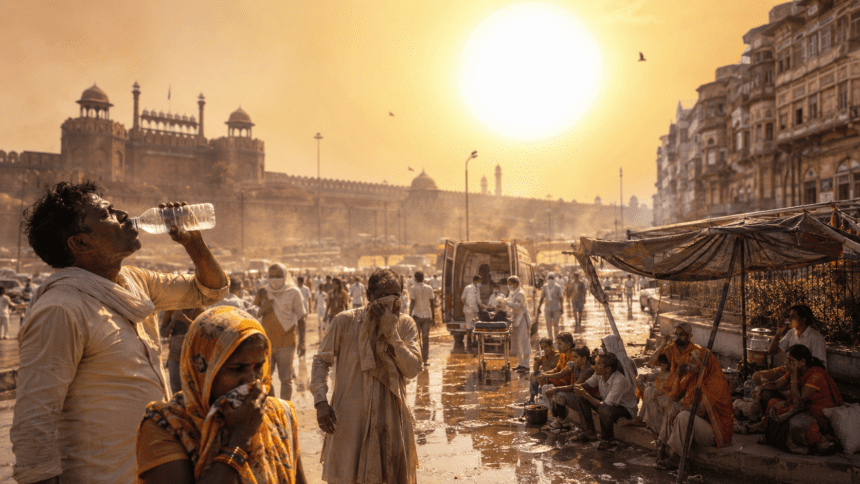
New Delhi: At least 16 people have died of heatstroke in southern India as a punishing heatwave pushes temperatures above 45°C in several cities, triggering fresh public-health warnings across the country.
Officials said the deaths were reported in Telangana, where the state government announced Rs 4 lakh in compensation for the families of each victim. The fatalities came as large parts of India continued to face extreme summer heat, with authorities urging people to avoid direct sunlight, drink water frequently and limit outdoor activity during peak afternoon hours.
The heat has been especially dangerous for outdoor workers, elderly people, children, street vendors, daily-wage labourers and those living without reliable access to cooling or clean water. Hospitals in some cities have reported a rise in heatstroke-related admissions, with patients suffering from dehydration, high fever, weakness and exhaustion.
Temperatures in several Indian cities have recently hovered well above 45°C, while parts of central and eastern India remain under severe heat conditions. In Odisha, weather officials warned that there may be no relief from the heat until at least May 28, as the hot spell continues to grip the region.
Heatstroke is one of the most dangerous forms of heat illness. It occurs when the body can no longer cool itself, causing body temperature to rise rapidly. Without quick treatment, it can damage the brain, heart, kidneys and muscles — and in severe cases, it can be fatal.
India faces intense heat every year before the monsoon, but scientists say climate change is making heatwaves longer, more frequent and more intense. That shift is turning summer from a seasonal hardship into a recurring public-health emergency, especially in crowded cities and poorer communities with limited protection from extreme temperatures.
The latest deaths are a grim reminder of how quickly heat can become deadly. In many areas, people cannot simply stay indoors: they work outside, commute long distances, or live in homes that trap heat through the day and remain hot at night.
Authorities have advised residents to avoid going out between late morning and late afternoon, wear loose clothing, keep drinking fluids and seek medical help if symptoms such as dizziness, confusion, vomiting, rapid heartbeat or fainting appear.
For now, officials are watching the weather closely. But as temperatures keep climbing, the real challenge is clear: protecting vulnerable people before the next heatwave turns deadly again.