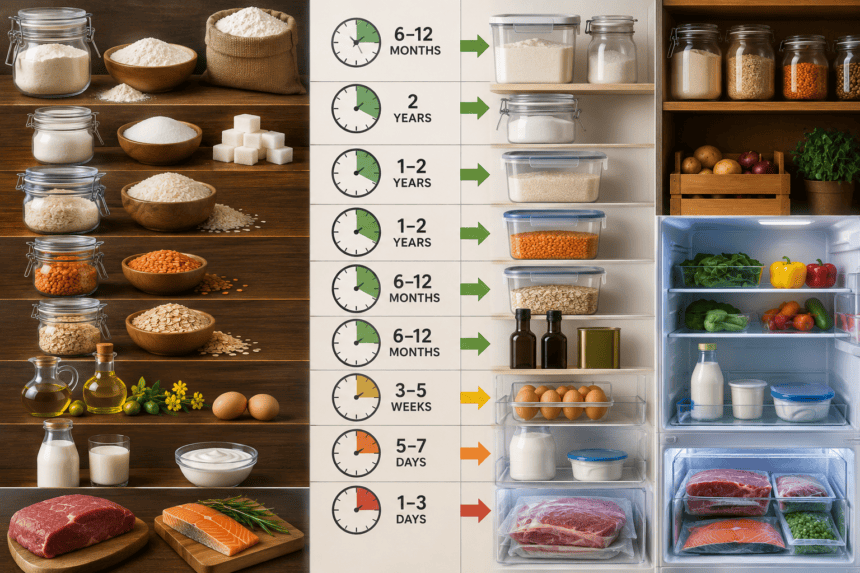
Knowing how long food ingredients remain fresh is an important part of keeping a kitchen safe and reducing unnecessary food waste. Different foods have different storage needs, and factors such as temperature, moisture, packaging and freshness can affect how quickly they spoil.
From fresh vegetables and dairy products to meat, eggs and pantry staples, proper storage can help maintain food quality and reduce the risk of foodborne illness.
Why Proper Food Storage Matters
Food can become unsafe when bacteria multiply under favourable conditions, particularly when perishable foods are kept at unsafe temperatures for too long.
The refrigerator should generally be kept at 40°F (4°C) or below, while the freezer should be maintained at 0°F (-18°C) or below.
Proper storage also helps preserve flavour, texture and nutritional quality.
How Long Do Fresh Ingredients Last?
1. Eggs
Fresh eggs can generally remain in the refrigerator for several weeks when stored properly. Keep them in their original carton and place them in the main refrigerator compartment rather than the door, where temperatures fluctuate more.
2. Milk
Milk should always be refrigerated and kept tightly covered. Once opened, check the package instructions and use it within the recommended period.
If milk develops an unusual smell, texture or appearance, it is safer to discard it.
3. Fresh Meat and Poultry
Raw meat and poultry are highly perishable.
Generally, ground meat and poultry should be used within 1–2 days when refrigerated, while larger cuts of beef, pork, lamb and veal may last around 3–5 days.
If you do not plan to cook them soon, freezing is a safer option for longer storage.
4. Fish and Seafood
Fresh fish and seafood are particularly perishable and should generally be refrigerated and used within 1–2 days.
Store them in a sealed container or package to prevent juices from contaminating other foods.
5. Fruits and Vegetables
Storage requirements vary considerably between fruits and vegetables.
Leafy greens usually last longer when refrigerated and kept dry. Berries should generally be kept refrigerated and washed shortly before eating rather than immediately after purchase.
Some fruits, such as bananas, can remain at room temperature, while others may benefit from refrigeration once they become ripe.
Avoid storing damaged or spoiled produce next to fresh items because mould and deterioration can spread.
6. Bread and Baked Products
Bread can usually be kept at room temperature for several days when stored in a cool, dry place.
If you will not consume it quickly, freezing can help extend its quality. Refrigerating bread may slow mould growth but can also make it become stale faster.
7. Rice, Pasta and Flour
Dry ingredients such as rice, pasta and flour generally last much longer than fresh foods when stored properly.
Keep them in airtight containers in a cool, dry pantry. Protect them from moisture, insects and excessive heat.
Whole-grain flours can spoil more quickly than refined flour because they contain more natural oils.
8. Cooking Oils
Cooking oils should be stored away from direct sunlight and heat. Keep bottles tightly closed when not in use.
Over time, oil can become rancid and develop an unpleasant smell or taste. If that happens, it should be discarded.
9. Spices and Dried Herbs
Dried spices may remain safe for a long time, but their flavour and aroma gradually become weaker.
Store spices in tightly closed containers away from heat, moisture and direct sunlight. Replacing very old spices can improve the taste of meals even if the product has not visibly spoiled.
10. Canned Foods
Unopened commercially canned foods can have a long shelf life when stored in a cool, dry place.
However, avoid using cans that are bulging, leaking, heavily rusted or badly damaged. Such damage can indicate a food-safety problem.
Once a can is opened, transfer unused food to a suitable container and refrigerate it.
How to Store Food Safely in the Refrigerator
Where food is placed inside the refrigerator can also matter.
Keep raw meat, poultry and seafood in sealed containers or on the lowest shelf to prevent their juices from dripping onto ready-to-eat foods.
Keep cooked foods and leftovers covered, and avoid overcrowding the refrigerator because cold air needs to circulate properly.
How Long Do Leftovers Last?
Most cooked leftovers should generally be refrigerated within two hours and consumed within 3–4 days.
For quicker cooling, place leftovers in shallow containers before refrigerating them.
If you know you will not eat leftovers within a few days, freezing them can be a better option.
Don’t Depend Only on Smell
One common mistake is assuming that food is safe simply because it smells normal.
Some harmful bacteria may not change the smell, appearance or taste of food. That is why recommended storage times and temperatures are important.
When you are unsure whether a highly perishable food has been stored safely, throwing it away is generally the safer choice.
Simple Ways to Make Food Last Longer
A few habits can help reduce waste while keeping food safer:
- Check refrigerator and freezer temperatures regularly.
- Store foods according to their storage requirements.
- Keep raw and cooked foods separate.
- Use airtight containers for dry ingredients.
- Label leftovers with the date they were prepared.
- Follow package instructions.
- Freeze foods you will not use soon.
- Keep your refrigerator clean.
- Avoid leaving perishable foods at room temperature for extended periods.
- Check older ingredients before using them.
Final Thoughts
Understanding how long common ingredients last can make everyday cooking safer and more economical. Fresh meat, seafood, dairy products and leftovers require particular attention, while dry ingredients can often be stored much longer under the right conditions.
Most importantly, remember that safe storage depends on both time and temperature. By keeping foods at appropriate temperatures, using suitable containers and paying attention to recommended storage periods, you can protect your family from foodborne illness while also reducing unnecessary food waste.