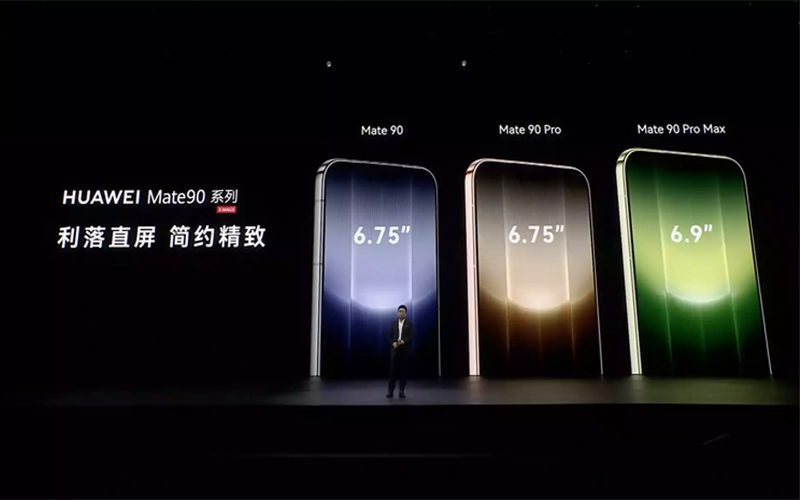
Huawei Technologies has launched its new Mate 90 smartphone series, placing greater emphasis on its homegrown operating system and chip technology as the company continues to navigate US restrictions on access to advanced semiconductor equipment.
The Mate 90 series succeeds the Mate 80 lineup introduced in November 2025. Premium models, including the Mate 90 Pro Max, are powered by Huawei’s Kirin 9050 Pro processor. The chip uses a technology Huawei calls “Logic Folding,” which restructures chip circuitry in three dimensions to increase processing density and improve performance. The approach is part of Huawei’s efforts to advance its processors despite limited access to cutting-edge chipmaking technology.
Richard Yu, head of Huawei’s consumer business, said China continues to face constraints in advanced semiconductor manufacturing capacity, affecting the supply of both smartphone processors and artificial intelligence chips. Huawei has indicated that it plans to expand the use of Logic Folding technology in future smartphones as it develops alternatives to conventional methods of improving chip performance.
The Mate 90 series runs on HarmonyOS 7, Huawei’s homegrown operating system that does not rely on Android. The platform supports more than 450,000 apps and services, according to the company.
Rising component costs
The launch comes as smartphone manufacturers in China face higher memory and component costs, putting pressure on handset prices and profit margins. Yu said rising memory costs have added around $200 to the cost of producing each handset, forcing Huawei to raise prices while attempting to keep increases relatively controlled.
Huawei’s smartphone shipments in China increased 13% year-on-year between January and August, while overall domestic smartphone shipments declined 7% during the same period, according to IDC data cited by Reuters. The Mate 90 Pro Max is priced at 9,999 yuan, or approximately $1,491.