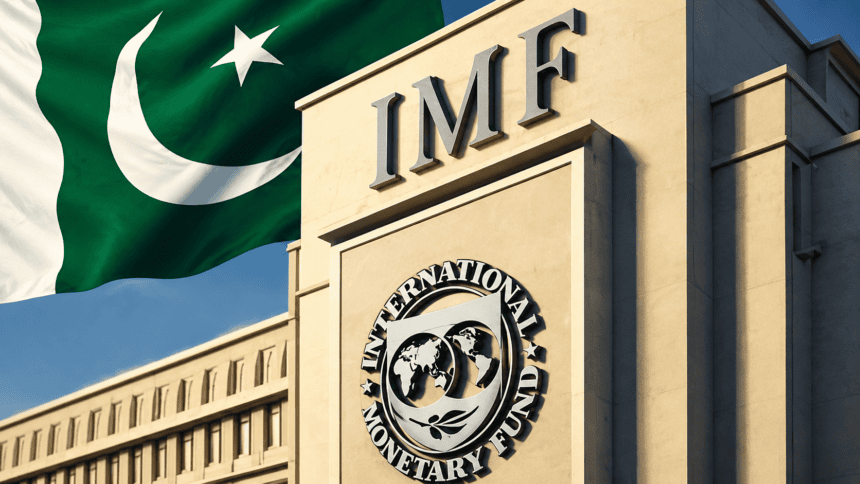
ISLAMABAD: Pakistan and the International Monetary Fund (IMF) have failed to reach a final agreement on the proposed Auto and Auto Parts Manufacturing Policy 2026-2031, with the lender raising objections to certain provisions of the draft, according to sources.
Sources said the IMF’s reservations would be conveyed to the Economic Coordination Committee (ECC) and the federal cabinet. Following consultations, some changes are expected to be made to the draft policy.
The final version will be prepared after consultations with the local automobile industry, importers and the IMF, sources said.
The Ministry of Industries and Production has shared the final draft of the Auto and Auto Parts Manufacturing Policy 2026-2031 with the IMF. The proposed policy focuses on reducing vehicle prices, improving manufacturing standards, boosting exports and bringing Pakistan’s automobile industry closer to global markets and supply chains.
Under the proposed policy, customs duties on ordinary vehicles are to be reduced by up to 80% over the next five years under the new national tariff framework. The government aims to reduce reliance on taxes while improving vehicle quality and promoting competition in the local market.
The draft places particular emphasis on electric vehicles. Special incentives and tax relief have been proposed for electric vehicles, including EVs, plug-in hybrid electric vehicles and range-extended electric vehicles.
The proposal includes setting sales tax on electric vehicles at 1%, while exemptions have been suggested for federal excise duty, capital value tax and withholding tax. A customs duty rate of 1% has also been proposed for equipment used at electric vehicle charging stations.
The draft also recommends increasing the financing limit for electric vehicles to Rs10 million and extending the repayment period from three to five years.
The new policy proposes six key principles for the automobile sector, including export growth, technological innovation, improved quality standards and stronger competition. Automobile and parts manufacturers would be required to meet specific performance targets, with penalties proposed in case of failure to achieve them.
Export targets have also been proposed for manufacturers. Car manufacturers would be required to raise exports from 4% in 2026-27 to 20% by 2030-31. For auto parts manufacturers, the export target would increase from 5% to 15%.
The draft recommends measures to connect Pakistani auto parts manufacturers with global supply chains. It also proposes the establishment of a Deemed Duty Drawback scheme and an Auto Parts Export Council to support exports.
The policy aims to promote environmentally friendly and fuel-efficient vehicles, while improving both prices and quality across the market. All vehicles except luxury models would be expected to become more affordable and meet improved quality standards.
The draft also proposes the adoption of 62 international standards in 2025 and another 45 standards by 2029. A Pakistan Auto Testing Institute is also proposed to strengthen vehicle testing and quality assurance.
Under the proposed rules, automobile companies would be required to provide customers with a delivery date at the time of booking. Companies would also bear the risk of any increase in vehicle prices after a booking has been made.
The final policy will be submitted to the ECC and the federal cabinet after further consultations with the IMF and industry stakeholders. Since several proposals remain under discussion, changes could still be made before the policy receives final approval.