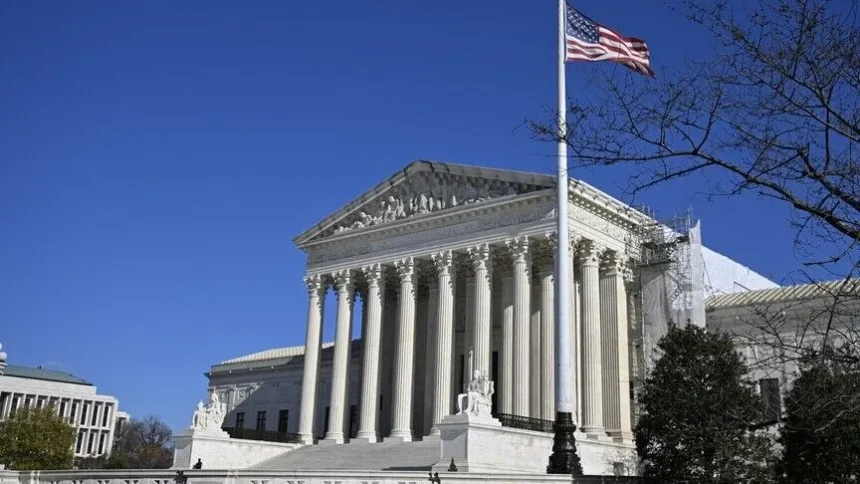
WASHINGTON: The US Supreme Court has temporarily allowed the Trump administration to resume deporting certain migrants to countries other than their countries of origin, even when they have no prior ties to those countries.
The court’s September 29 order stayed a lower-court ruling that had restricted the policy and required migrants to receive adequate notice and an opportunity to raise concerns that they could face persecution or torture in the country to which they were being deported. The Supreme Court also agreed to hear the case on the legality of the policy in its December 2026 argument session.
The policy, often referred to as “third-country deportation,” has been used by the Trump administration since 2025 to remove migrants who cannot be returned immediately to their home countries, including people whose removal is complicated by legal protections or by the refusal of their countries of origin to accept them.
Human rights groups have estimated that more than 25,000 migrants have been deported to at least 28 or 29 third countries under the policy, with Mexico receiving the largest number. Others have been sent to countries including Liberia, Uganda and South Sudan.
The legal dispute focuses largely on due-process protections. A federal judge in Massachusetts ruled against the policy, and the US Court of Appeals for the First Circuit upheld that decision in September. The lower courts found that migrants were not being given sufficient notice or a meaningful opportunity to explain why they might face persecution or torture in the third country.
The Trump administration challenged the lower-court decision at the Supreme Court on September 24, asking the justices to allow the deportations to continue while the broader legal challenge proceeds.
The Supreme Court’s order is not a final ruling on whether the policy is lawful. Instead, it temporarily lifts the lower-court restrictions while the justices consider the case. The court has identified several questions for review, including whether the lower court had jurisdiction, whether it had authority to issue the nationwide relief, and whether the government’s third-country removal policy complies with federal immigration law and constitutional due-process protections.
Three justices — Sonia Sotomayor, Elena Kagan and Ketanji Brown Jackson — said they would have denied the administration’s request to lift the lower-court ruling.
The administration argues that third-country removals are an important immigration-enforcement tool, particularly when migrants cannot be returned to their home countries. Immigration advocates and human-rights groups, however, have raised concerns that some deportees could face persecution, torture or detention in countries with which they have no connection.
The Supreme Court is expected to consider the broader legal questions in December, with a final ruling potentially determining the future scope of the Trump administration’s third-country deportation policy.