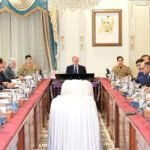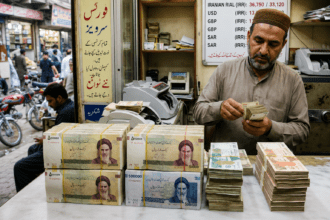
ISLAMABAD: A coalition of traders on Saturday urged the federal government to reduce the turnover tax to 0.5 per cent in the upcoming budget, warning that businesses across the country are already struggling with rising costs, weak purchasing power and what they described as excessive pressure from tax authorities.
Speaking at the National Press Club in Islamabad, Ajmal Baloch, president of the All Pakistan Anjuman-i-Tajiran and Traders Action Committee, said the government should move toward a simpler and lower-rate tax system instead of relying on what traders see as coercive collection methods. He argued that a reduced turnover tax would encourage business activity and, in the long run, could help expand the tax net rather than shrink it.
Baloch said traders were not refusing to pay taxes, but wanted a system that was easy to understand, predictable and free from what he called harassment by the Federal Board of Revenue. According to him, if the government introduces a practical “easy tax scheme” and makes it part of a long-term policy framework, it could improve compliance while giving shopkeepers and small businesses some breathing space.
The demand comes as the government prepares the next federal budget amid pressure to increase revenue collection. Business groups have been pressing Islamabad to avoid new tax burdens on retailers and small traders, who say high electricity bills, expensive fuel, gas prices and slower market activity have already squeezed their margins.
Baloch also called on Prime Minister Shehbaz Sharif to introduce reforms in customs, alleging that legitimate goods are often held for months, causing losses to traders as well as the national exchequer. He demanded inquiries into customs-related practices, including the use of confiscated vehicles, and claimed that corruption in the Point of Sale system had added to mistrust between traders and tax officials.
The traders’ latest demand is broadly in line with other proposals floated by business representatives in recent days. Another traders’ platform has suggested a simplified regime under which only 0.25% to 0.50% tax should be charged on declared turnover, while withholding taxes deducted through electricity, telephone and other utility bills should be made adjustable. Some traders have also shown willingness to accept a minimum annual tax payment of Rs25,000, provided the system remains simple and non-intrusive.
Traders have long argued that complicated paperwork, frequent notices and multiple withholding requirements discourage documentation instead of promoting it. Their position is fairly simple: lower the rate, simplify the return, and more people will come into the system. Whether the finance ministry buys that argument in the budget is the big question now.
For the government, though, the challenge is not small. Islamabad needs revenue, and lots of it, especially under tight fiscal conditions and continuing scrutiny from lenders. But pushing too hard on small retailers has sparked protests before. In 2024, traders and dealers in different sectors protested against new tax measures and higher utility costs, showing how quickly tax policy can turn into a political headache when markets feel cornered.
The coming budget will show whether the government chooses a softer, negotiated approach with traders or sticks to tougher enforcement through the FBR. For now, traders are making their message clear: they want to pay less, file more easily, and keep tax officials at a distance.