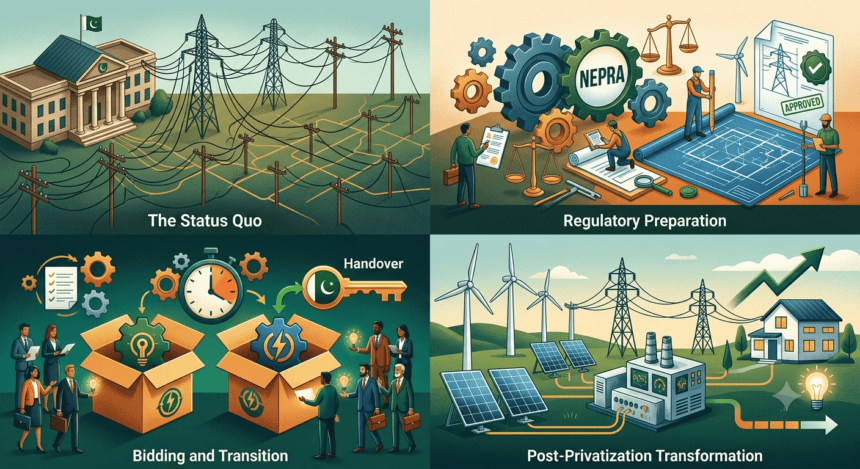
The federal government has officially initiated the privatization process for the first batch of power distribution companies (DISCOs), marking a critical step in its bid to stem the hemorrhaging of state resources.
Privatization Minister Abdul Aleem Khan confirmed this week that the process is now underway, with the government targeting the most loss-making entities first. The move comes as the energy sector’s circular debt continues to dwarf national development budgets, leaving the state-run power apparatus on the brink of insolvency.
The plan involves transferring management control to the private sector rather than a complete divestment of assets. Officials argue this model—long-demanded by international lenders including the IMF—will introduce professional management and efficiency to companies that have historically served as epicenters for political patronage and systemic theft.
For years, these distributors have operated with staggering technical and commercial losses. In some regions, transmission and distribution (T&D) losses exceed 30%, a figure that would bankrupt any private firm. The government is betting that a private operator, incentivized by profit margins and strict performance benchmarks, will succeed where bureaucratic oversight has repeatedly failed.
However, the path to privatization is fraught with political risk. Power sector unions have already signaled resistance, fearing mass layoffs and a potential hike in electricity tariffs for the end consumer. Past administrations have flirted with similar proposals only to retreat when faced with the threat of nationwide strikes and public backlash.
The government’s primary challenge lies in valuation. Investors have remained wary of the sector’s regulatory environment, where political interference often overrides contractual agreements. To entice bidders, the Cabinet Committee on Privatization has proposed a phased approach, starting with companies that show the most promise for a quick turnaround.
Whether these companies can attract credible buyers remains the central question. Without a significant overhaul of the regulatory framework, analysts warn that the government might find itself with few takers, or worse, forced to accept fire-sale prices that provide only temporary relief to the national exchequer.
As the tender documents prepare to hit the market, the government is running out of time. With the energy sector’s deficit threatening to derail broader fiscal reforms, the success of this privatization drive will likely define the administration’s economic legacy.