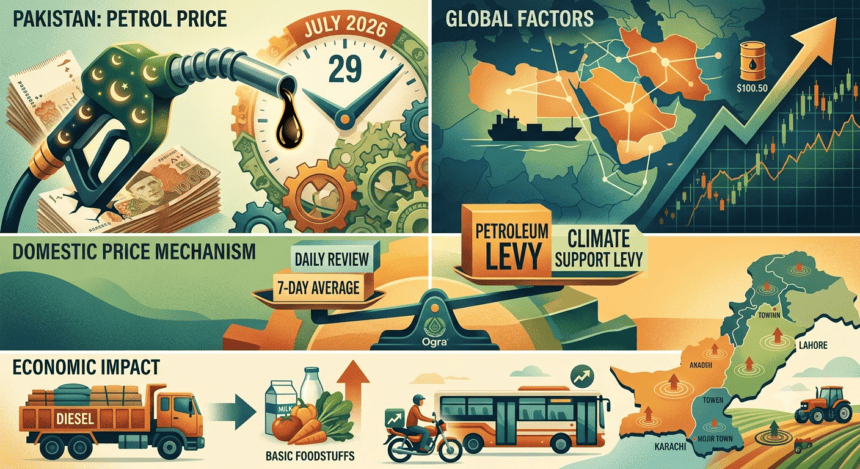
ISLAMABAD — The federal government announced a price reduction for petrol and high-speed diesel late Tuesday, offering a rare reprieve to consumers grappling with high transport costs. Effective July 29, the price of petrol drops by Rs 8.50 per liter, while diesel sees a reduction of Rs 6.20.
This adjustment brings the cost of petrol to Rs 268.40 per liter, down from the previous high of Rs 276.90. The Finance Division confirmed the move, citing a consistent downward trend in international oil prices over the last fortnight.
For the average commuter, the relief is tangible. Fuel costs have been the primary driver of inflation in Pakistan for over a year, pushing up the price of everything from vegetables to electricity. While this cut won’t erase the impact of past hikes, it signals a shift in the government’s fiscal balancing act, which has been under intense pressure from the IMF to maximize petroleum levy collections.
Finance Ministry insiders suggest the decision was finalized after the Petroleum Division calculated that current global benchmarks provided enough “breathing room” to lower domestic rates without compromising the monthly revenue targets agreed upon with international lenders.
Opposition leaders have already dismissed the move as “too little, too late.” They argue that the government only passes on international price drops when political pressure mounts, ignoring the broader economic strain on lower-income households.
Economic analysts, however, view the cut as a necessary correction. “The government had to act,” said an energy sector analyst based in Karachi. “Keeping prices artificially high when global markets are softening would have been an impossible sell, even for this administration.”
Despite the lower pump price, transport fares often remain sticky. Historically, public transport operators in cities like Lahore and Karachi are slow to adjust ticket prices downward, meaning the immediate benefit may stay confined to private vehicle owners.
The government’s next review is scheduled for mid-August. Whether this downward trajectory holds depends entirely on the volatility of the Middle Eastern supply chain and the stability of the rupee against the dollar. For now, the fuel pump meter has finally moved in the right direction.