Europe’s latest heatwave is taking a surreal turn. A massive plume of Saharan dust is currently pushing across the Mediterranean, set to cloak the continent’s skies in a hazy, orange-tinted gloom just as temperatures soar toward record-breaking highs.
Meteorologists tracking the event confirm the mineral-rich air is surging north from the desert, propelled by the same high-pressure system trapping heat over Southern Europe. While the heat is the primary concern for public health, the dust brings its own set of complications.
Air quality monitors in Spain and Italy are already flashing warnings. Fine particulate matter—known as PM10—is expected to spike, potentially pushing pollution levels well beyond World Health Organization safety guidelines. For those with respiratory issues, the combination of stagnant, scorching air and abrasive dust creates a dangerous environment.
“It’s not just the heat,” said a regional climate researcher in Madrid. “The dust traps the heat at the surface, preventing the usual cooling we might see overnight. It’s an insulating blanket of grit.”
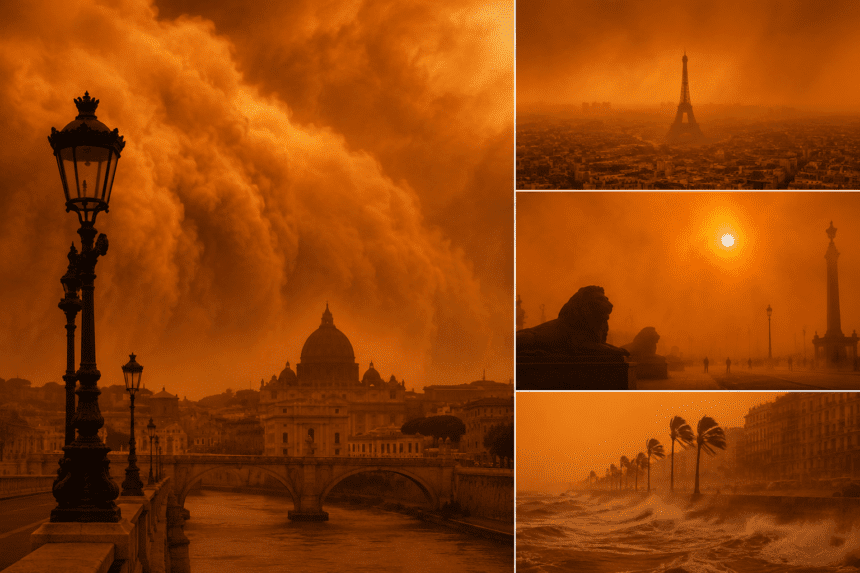
The aesthetic impact will be stark. Skies from the Iberian Peninsula to the Alps are expected to shift from blue to a muted, yellowish-grey. In many regions, the incoming dust will mix with moisture, potentially triggering “blood rain”—a phenomenon where light showers leave a thin, dusty residue on vehicles and buildings.
This cycle of desert air is becoming more frequent. While Saharan dust incursions are a natural seasonal occurrence, climate models suggest that shifting atmospheric circulation patterns are moving these plumes further north and with greater intensity than in previous decades.
Infrastructure is also bracing for the impact. Solar energy production may see a temporary dip as panels become coated in fine sand, reducing their efficiency just as demand for air conditioning pushes the power grid to its limit.
As the plume moves inland, the focus remains on the elderly and vulnerable populations already struggling with the thermal stress. The orange haze might make for dramatic photos, but for the millions trapped beneath it, it’s a grim reminder of a changing climate that is increasingly blurring the lines between seasonal weather and extreme event.