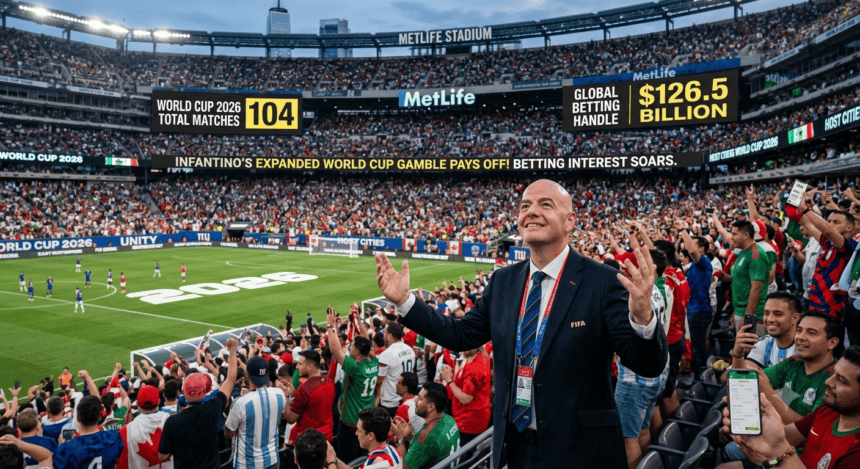
FIFA President Gianni Infantino’s ambitious decision to expand the FIFA World Cup from 32 to 48 teams is proving to be a commercial success, despite facing heavy criticism when it was first announced.
Many football experts had argued that increasing the number of participating nations would reduce the tournament’s quality and create one-sided matches. However, the expanded format has delivered more fixtures, greater fan engagement, and a significant rise in betting activity across global sportsbooks.
According to reports, bookmakers have experienced a sharp increase in betting volumes compared to previous World Cups. The additional matches have created more wagering opportunities for fans, making the tournament more attractive for betting companies and broadcasters alike.
The 2026 FIFA World Cup, jointly hosted by the United States, Canada, and Mexico, is the biggest edition in the tournament’s history. FIFA believes the larger competition has helped football reach new audiences while providing smaller nations with a chance to compete on the world’s biggest stage.
Infantino has repeatedly defended the expansion, saying the goal was to make football more global and inclusive. Record stadium attendances, strong television viewership, and increased commercial revenue have strengthened FIFA’s confidence that the new format is working as intended.
Although some critics continue to question whether the quality of football has remained consistent throughout the tournament, FIFA considers the expanded World Cup a major success from both sporting and financial perspectives.