
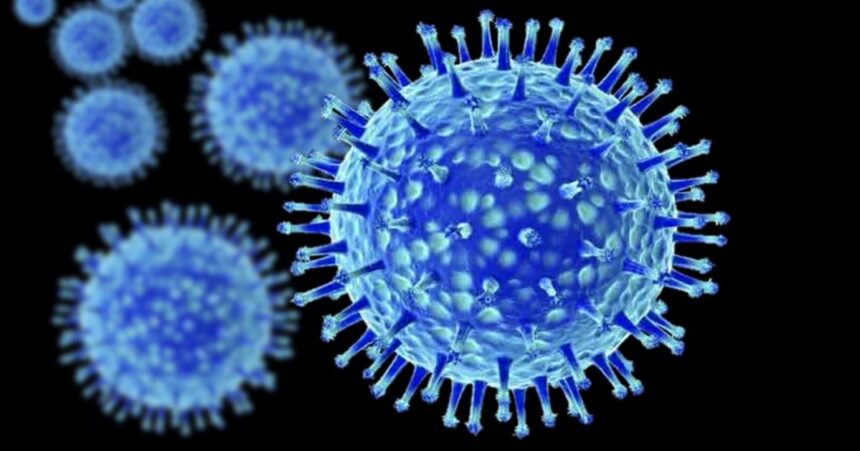
According to the World Health Organization (WHO), the main reason for the increase is Influenza A (H3N2) and its new sub lineage, subclade, which is a mutated form of H3N2 and shows several genetic changes compared to related viruses.
Concern is growing due to the rapid spread of flu referred to as “super flu” in several European countries, particularly the United Kingdom. However, Pakistani health experts say that while the situation requires caution, there is no need to panic, as this illness has emerged due to genetic changes in an existing virus rather than a new virus.
According to the World Health Organization (WHO), the main cause of this increase is Influenza A (H3N2) and its new sub lineage subclade, which is a modified form of H3N2 and has several genetic changes compared to related viruses.
The WHO has confirmed that flu activity has increased worldwide in recent months, and in many countries, flu cases have begun to rise earlier than the usual seasonal pattern.
However, current epidemiological data do not indicate that the subclade causes more severe illness compared to previous viruses. Nevertheless, its early spread is concerning, while vaccination remains an effective way to reduce the risk of severe illness and hospitalization.
The WHO has emphasized that influenza is a common disease that evolves every year through gradual genetic changes, making continuous surveillance and timely updates of vaccines essential.
Situation in Pakistan:
Experts say that although hospital admissions have increased in Europe due to this virus, Pakistan is likely to experience less severe effects due to a relatively smaller elderly population and different seasonal patterns, though the situation still requires attention.
Former Punjab provincial health minister and international advisor at the Royal College of London, Dr Javed Akram, told Dawn in Islamabad that changes in the virus could increase risks for vulnerable groups.
He said that when flu turns into pneumonia, the chances of patients, especially children, the elderly, and people with other illnesses, being put on ventilators increase. He advised the public to get influenza vaccination before the start of winter.
Chairman of the Pakistan Society of Internal Medicine, Dr Javed Akram, further said that the vaccine reduces the risk of influenza by an average of up to 70 percent, therefore all healthcare workers should also be vaccinated, as they are not only more likely to be affected but can also become a source of spreading the virus.
Emerging infectious disease expert and leader of Pakistan’s COVID-19 response, Dr Rana Safdar, said that Pakistan is currently at the peak of flu transmission. He explained that while younger individuals play a major role in spreading the virus in the community, severe complications are mostly seen in the elderly and those with chronic diseases.
He said that very few elderly people in Pakistan get the flu vaccine, which puts them at higher risk every winter.
Dr Rana Safdar confirmed that the H3N2 subclade responsible for the flu wave in the UK is also being reported in Pakistan.
According to him, although this virus is different from the strain selected by the WHO for the 2025–26 flu vaccine, the vaccine will still reduce the risk of severe illness.
He warned that dense fog prevailing in different parts of the country could further increase the spread of the virus. He said that preventive measures remain the traditional ones, including the use of masks, hand hygiene, and maintaining distance from symptomatic individuals.
He advised that in case of symptoms, patients should not immediately use antibiotics but should take adequate rest, drink warm fluids, and consume nutritious food.
Microbiologist Professor Javed Usman said that due to the circulation of multiple respiratory viruses at present, including rhinovirus, parainfluenza, RSV, and SARS CoV-2, diagnosing flu based on symptoms alone has become almost impossible.
He said that the best time to get the flu vaccine, known as the “sweet spot,” is between September and October, as it takes at least two weeks to develop effective immunity.
Chief of Public Health Laboratories at the National Institute of Health (NIH), Dr Muhammad Salman, confirmed that seasonal influenza is currently common in Pakistan as well as worldwide.
He said that a new flu vaccine is introduced every year in August, and he recommends that this vaccine should be administered to elderly individuals and those with weakened immune systems.
Sharp Increase Across Punjab:
Senior medical experts in Lahore have reported a sharp increase in super flu cases, particularly in densely populated urban areas. People living in high rise buildings, those frequently visiting crowded markets, and individuals attending events such as weddings are at higher risk of infection.
Senior Principal Medical Officer and Consultant Dr Masood Akhtar Sheikh said that this strain is causing a noticeable increase in cases in major cities of Punjab, including Lahore, Gujranwala, Rawalpindi, and Faisalabad.
He said that so far no deaths have been reported in Pakistan due to this variant, however, the number of patients presenting with flu and chest complications has increased.
Children are acting as super spreaders within households and often transmit the virus to elderly family members.
Dr Sheikh said that the current situation has become more serious due to the combination of seasonal flu, COVID-19, and RSV infections, while international travel can accelerate the spread of the virus, as seen in the UK, where this season is being compared to the severe flu wave of 2017–18.
Former head of the emergency department at Sheikh Zayed Hospital Lahore, Dr Muhammad Arshad, recommended oseltamivir for high risk patients, which can reduce the duration and severity of the illness. However, this medicine is not necessary for all patients and should not be used without a doctor’s advice.
He said that patients should wear N95 masks, wash their hands frequently, ensure proper ventilation in rooms, and that adequate hydration, balanced nutrition, and rest are essential for early recovery.
He also emphasized that all individuals above six months of age should receive the flu vaccine.