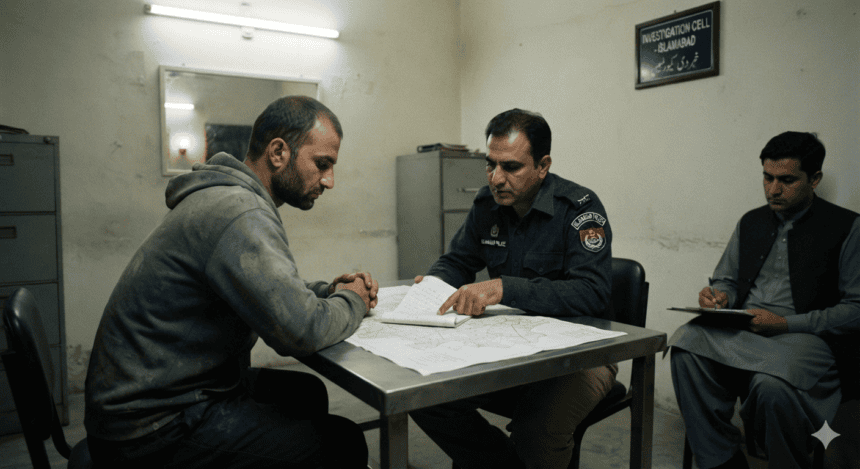
ISLAMABAD — Investigators in the capital have begun peeling back the layers on a group of foreign nationals detained earlier this week, with initial interrogations revealing links to unauthorized surveillance and suspected illicit financial activity.
The arrests, executed in a coordinated sweep across the capital’s suburban districts, have sent ripples through the city’s diplomatic and security circles. While officials remain tight-lipped on the specific nationalities of those held, sources within the Federal Investigation Agency (FIA) confirm the detainees were operating without valid documentation or local business registrations.
The primary focus of the probe is the discovery of encrypted communication devices found in the suspects’ possession. These aren’t standard consumer gadgets. Forensic experts are currently working to bypass the security layers on the hardware, hoping to map out the suspects’ network and identify their local facilitators.
For the security establishment, the “so what” is clear: the capital has seen a rise in “tourist-visa” activity that masks intelligence-gathering operations.
“We are tracking patterns that don’t fit the profile of typical visitors,” a senior security official told reporters on condition of anonymity. “These individuals weren’t here for the sights. They were here for specific data points, and we intend to find out who was paying for that intelligence.”
The suspects are currently being held at a high-security facility on the outskirts of Islamabad. Legal counsel for the detainees has yet to be granted full access, a move the interior ministry justifies by citing the “sensitive nature of the ongoing national security investigation.”
This isn’t an isolated incident. The government has tightened visa-on-arrival protocols over the last six months, reacting to a series of security breaches that suggested foreign actors were embedding themselves within the city’s commercial hubs.
The investigation is expected to broaden. With the forensic teams now deep into the recovered data, investigators are bracing for a list of local accomplices. If the evidence holds, the fallout could lead to a significant diplomatic protest and a complete overhaul of how the capital monitors long-term foreign residents.
For now, the suspects remain in custody, and the ministry is keeping the pressure on the teams to produce a formal charge sheet by the weekend. Whether this leads to a trial or a quiet deportation behind closed doors remains the central question facing the interior department.