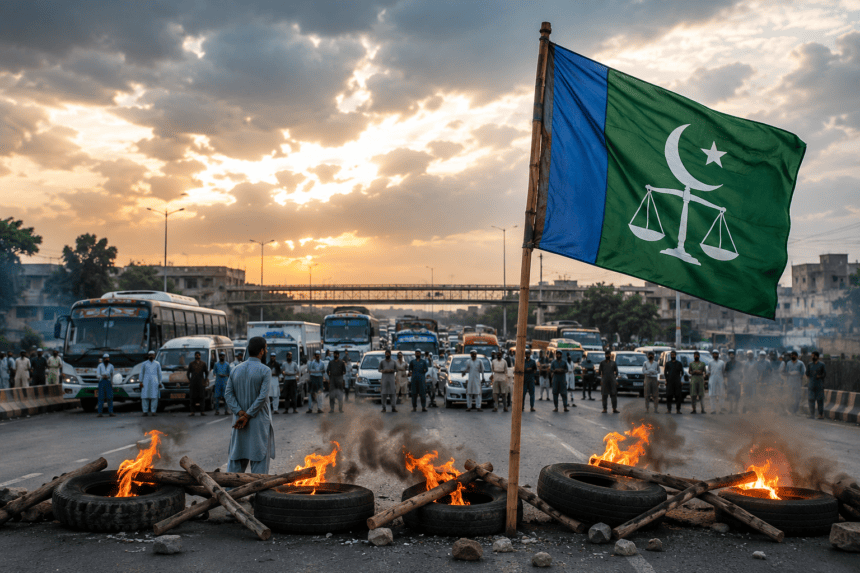
Jamaat-e-Islami (JI) has confirmed plans for a nationwide “wheel-jam” strike, scheduled to take place immediately following the 12th of Rabi-ul-Awwal. The party’s leadership, led by Emir Hafiz Naeemur Rehman, announced the move as a direct challenge to the government’s current economic policies, specifically targeting rising electricity costs and heavy taxation.
The timing is strategic. By waiting until after the religious observances of Rabi-ul-Awwal, the JI avoids disrupting major public processions while ensuring the protest gains maximum momentum as the country returns to its routine.
For the government, this is more than just a political nuisance. The JI has spent weeks building a protest camp in Rawalpindi, demonstrating a level of persistence that has unsettled the ruling coalition. Their demands remain consistent: a rollback of the recent electricity tariff hikes, the cancellation of agreements with Independent Power Producers (IPPs), and a reduction in the tax burden on the salaried class.
“We aren’t asking for favors; we are demanding basic relief for a population that is being pushed to the brink,” Rehman told supporters during a recent rally. He signaled that the party is no longer interested in back-channel talks unless the government provides concrete, time-bound relief measures.
The strike poses a significant logistical risk. A “wheel-jam” implies a total shutdown of transport networks and commercial hubs. If successful, it could paralyze major urban centers, including Karachi, Lahore, and Islamabad, effectively stalling the supply chain and forcing the government to address the protests on a national scale.
Analysts suggest the government is in a bind. Yielding to the JI’s demands would complicate their standing with the International Monetary Fund (IMF), which has strictly mandated the removal of subsidies and an increase in revenue collection. However, ignoring a nationwide shutdown could embolden other opposition factions and labor unions, potentially sparking a broader wave of civil unrest.
The government’s response has so far been muted, characterized by ministerial statements dismissing the protests as politically motivated. Behind the scenes, however, law enforcement agencies are reportedly bracing for potential clashes at key entry points of major cities.
As the date approaches, the focus shifts to how much public support the JI can actually mobilize. If the strike gains traction beyond the party’s traditional base, the administration will face its most significant domestic challenge since taking office.
The coming days will show whether the government chooses to negotiate or rely on administrative crackdowns to keep the streets open. Either way, the political temperature in Islamabad is rising.