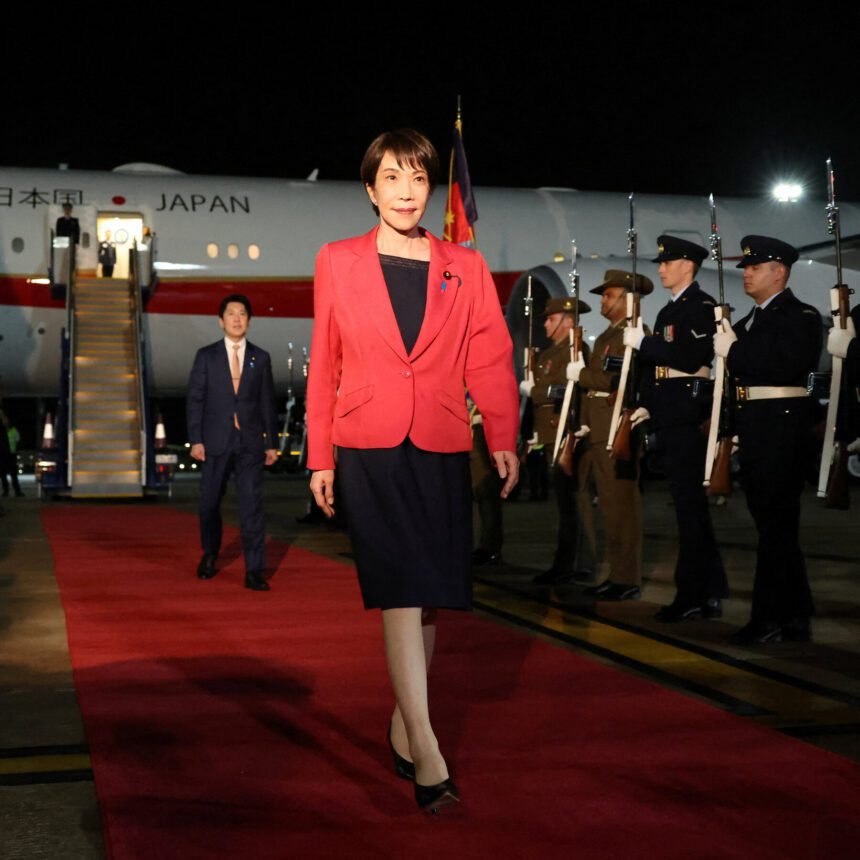
Japanese Prime Minister Sanae Takaichi has emphasized “strength and stability” during her recent diplomatic visits to Australia and Vietnam, focusing on building resilient partnerships in energy, security, and economic cooperation across the Indo-Pacific region.
During her trip, Takaichi held high-level talks with leaders including Anthony Albanese, highlighting the importance of stable supply chains and stronger economic security. Agreements were signed to deepen cooperation in energy and critical minerals, sectors seen as vital for shielding both economies from global disruptions, particularly amid tensions affecting oil and gas supplies.
In Australia, both countries committed to maintaining reliable energy trade, with Australia already supplying a significant share of Japan’s liquefied natural gas. The partnership also includes major investments in critical minerals projects, aimed at reducing dependence on unstable or concentrated supply sources and reinforcing long-term economic stability.
Earlier, in Vietnam, Takaichi promoted deeper cooperation under the countries’ Comprehensive Strategic Partnership. Talks focused on energy security, rare earth minerals, and emerging technologies such as artificial intelligence and semiconductors. Japan also pledged support for Vietnam’s energy needs through new initiatives, reflecting a shared goal of strengthening regional resilience.
Across both visits, Takaichi stressed the broader vision of a “Free and Open Indo-Pacific,” arguing that closer collaboration among regional partners is essential to ensure stability, economic growth, and security in the face of rising geopolitical uncertainty.
The visits signal Japan’s intent to take a more assertive leadership role in the region, using economic partnerships and strategic cooperation to promote stability while countering global supply risks and shifting geopolitical dynamics.