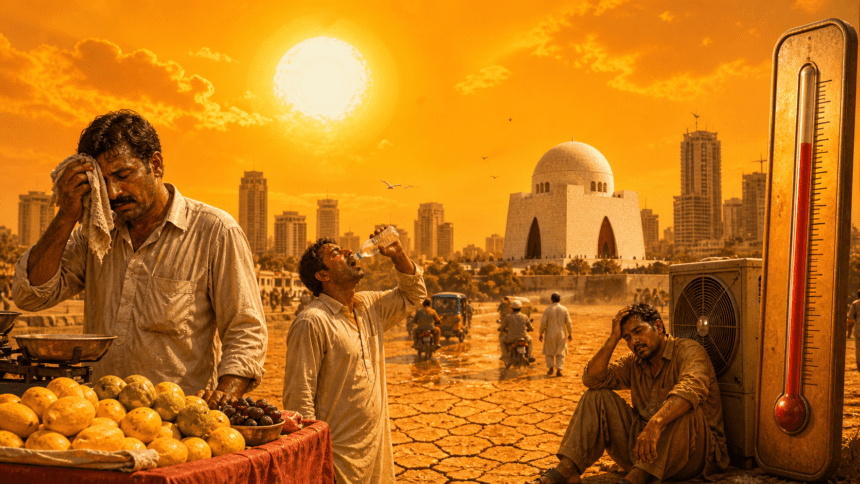
Karachi recorded its hottest day of the year on Monday, with the temperature reaching 44.1°C at the Old Airport Weather Station, according to current weather reporting citing the Pakistan Meteorological Department. The same report said it was the city’s hottest day since 2018, underlining the severity of the latest hot spell.
The temperature spike has sharpened concern over public health, power demand, and working conditions in a city where extreme heat quickly becomes more than a weather story. Karachi has already been under heat stress in recent days, and the latest reading pushed that pressure further, especially for outdoor workers, children, older residents, and people without reliable cooling.
The broader historical context makes the figure stand out even more. The reported comparison says Karachi had last touched more intense May heat in 2018, when the temperature reached 46°C, while the city’s highest-ever May temperature remains 48°C recorded in 1938. That places Monday’s 44.1°C in serious territory, even if it did not break the all-time record.
With temperatures at this level, the practical message is straightforward: avoid unnecessary exposure during peak afternoon hours, stay hydrated, and take heat-related symptoms seriously before they turn dangerous. In Karachi, heatwaves do not stay confined to thermometers for long — they spill into hospitals, streets, homes and daily work routines very quickly.