

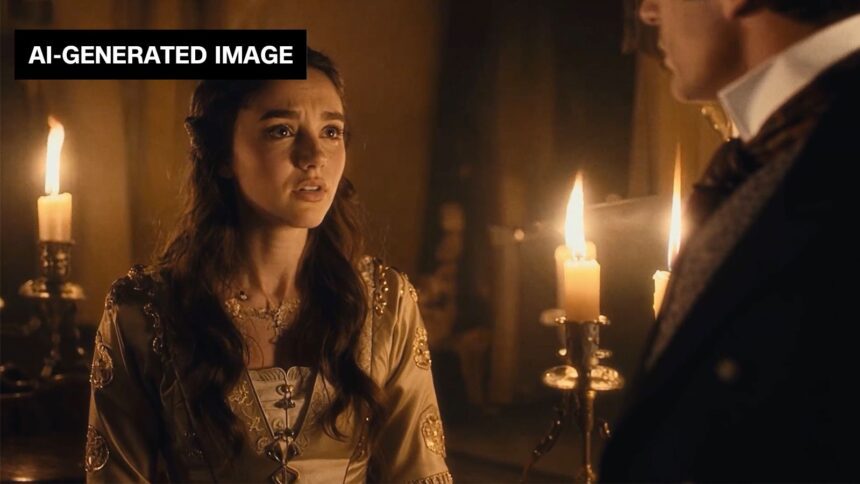
Hollywood just met its newest “it girl.”
She has perfect skin, flawless delivery, and an IMDb page — but there’s one catch: she doesn’t actually exist.
Meet Tilly Norwood, the world’s first AI-generated actress, whose debut has shaken the entertainment industry to its core.
The Rise of a Digital Star
Created by Particle6 Studios under producer and comedian Eline van der Velden, Tilly was introduced this fall as a “fully synthetic performer” — designed for use in films, commercials, and even virtual interviews.
She has a detailed backstory, a social-media presence, and a face that could belong on any red carpet. But behind those green eyes and that perfect lighting isn’t a human actor — it’s a neural network trained on data from thousands of real performances.
Van der Velden describes Tilly as “a new kind of creative collaborator — a digital being made to enhance storytelling, not replace artists.”
But that’s not how Hollywood’s actors see it.
Backlash From the Real Stars
Within days of Tilly’s announcement, the industry erupted.
SAG-AFTRA, the actors’ union, released a sharp statement condemning the project:
“Tilly Norwood is not an actor. Creativity is, and should remain, human-centered.”
Oscar-winner Emily Blunt called it “deeply unsettling”, while Whoopi Goldberg went further:
“You’re competing with a face that’s built from everyone else’s data. That’s not acting — that’s theft.”
Their concern isn’t just about one AI model — it’s about what she represents: a future where studios might not need to hire human performers at all.
A Threat to the Craft — or an Evolution of It?
For over a century, acting has been about human emotion — about living a character rather than rendering one.
Critics argue that an algorithm can mimic gestures, even tone, but not the subtle empathy that real actors bring to the screen.
Beyond artistry, there’s the issue of consent. How much of Tilly’s “performance” is based on data scraped from real actors’ expressions, voices, or body movements — often without permission?
Unions warn this could become the deepfake era of performance, where stars unknowingly lend their likeness to AI replicas.
But supporters see potential. Some filmmakers view AI performers as tools to test scripts, pre-visualize scenes, or craft entirely digital worlds without physical constraints.
Who (or What) Is Tilly Norwood?
According to her creators, Tilly is built on a generative AI system capable of learning from film scripts, emotional cues, and motion data. She can take direction, improvise dialogue within constraints, and even “age” or “recast” herself digitally.
In short, she’s Hollywood’s first algorithmic actress — and perhaps its most controversial.
Her creators insist she’s meant to collaborate with humans, not compete with them. But the optics are complicated.
“We already have fewer jobs, smaller budgets, and more automation,” said one casting director in Los Angeles. “Now even the faces might not be real? That’s terrifying.”
The Industry Crossroads
Tilly’s debut comes just months after Hollywood’s historic strikes over AI use and likeness protection — a reminder that technology isn’t just transforming the business; it’s redefining what performance even means.
For studios, AI actors could mean shorter shoot times, lower costs, and endless creative flexibility.
For actors, it might mean obsolescence.
That’s why this isn’t just a novelty — it’s a turning point.
What Happens Next
For now, Tilly Norwood exists mostly online, a face on screens rather than in theaters. But her very presence has forced Hollywood to ask hard questions:
-
Who owns a performance when it’s generated by code?
-
How do we protect creative labor in a digital era?
-
And can something truly act if it’s never felt — or even lived?
Final Take
Tilly Norwood may not breathe, cry, or laugh like the rest of us — but her arrival is real enough to make Hollywood nervous.
Because whether you see her as innovation or imitation, one thing’s certain:
The next big name in movies might not belong to a person at all.