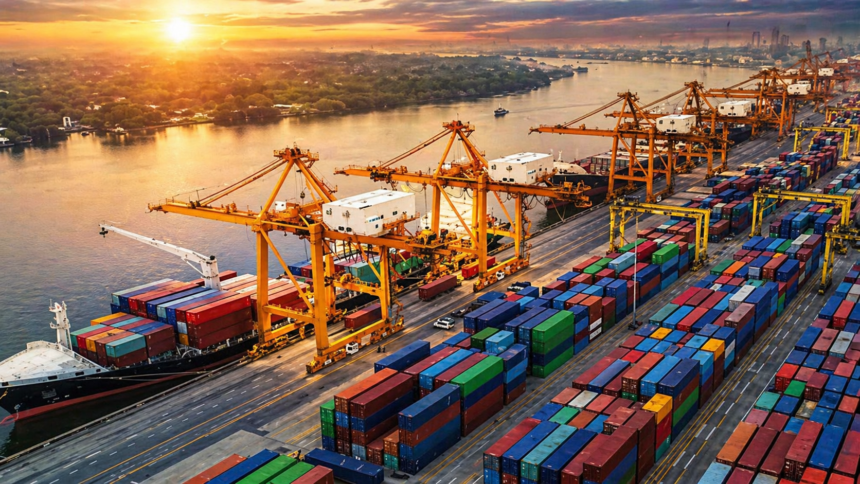
Pakistan’s machinery imports rose 10.28% in the first nine months of FY2025-26, reaching $7.866 billion from $7.133 billion a year earlier, according to official trade data reported on April 28. The jump is being read as a sign that industrial activity has started to stir after a long stretch of weak demand and cautious spending.
The import mix tells a fairly clear story. Construction and mining machinery posted one of the sharpest increases, up 72.62% to about $124 million. Textile machinery imports climbed 20.17% to roughly $395 million, while power-generating machinery rose 16.57% to about $630 million. Office machinery and automatic data-processing equipment also moved higher, up 15.34% to $238 million, suggesting businesses are still spending on core equipment as activity improves.
Telecom-related imports strengthened too. Imports of telecom equipment increased 12.82% to about $1.34 billion, while mobile phone imports rose 11.62% to nearly $1.30 billion during July-March. That matters because these categories tend to rise when business confidence, consumer demand and network investment are all moving in the same direction. Not everything was up, though: electrical machinery and apparatus imports fell 20.60% to around $736 million, a reminder that the recovery still looks uneven across sectors.
Zoom out a little, and the broader trade picture looks heavier. Pakistan’s total imports in July-March FY2025-26 climbed 6.89% to $50.655 billion, while the cumulative trade deficit widened to $27.913 billion. So yes, more machinery is coming in, and that can be a healthy sign for production and investment, but it is also landing in an economy that still has to watch its external account very carefully.
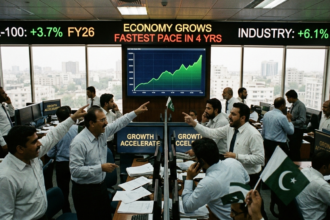
There’s also some wider economic context behind the trend. The Asian Development Bank said this month that Pakistan’s economy is expected to grow 3.5% in FY2026 after 3.1% in FY2025, helped by a recovery in manufacturing and stronger investment activity. That does not prove every extra dollar of machinery imports is productive investment, of course, but it lines up with the idea that industry is slowly regaining its footing.
Still, the picture isn’t simple. Higher machinery imports can mean factories are expanding capacity, replacing worn-out equipment, or preparing for stronger orders. They can also reflect delayed purchases finally coming through after financing conditions improved. Either way, this is one of those numbers traders, manufacturers and policymakers will watch closely in the months ahead. If the rise in machinery imports is followed by firmer output, exports and employment, it will look like a real industrial rebound. If not, it may end up being just a burst of pent-up demand.