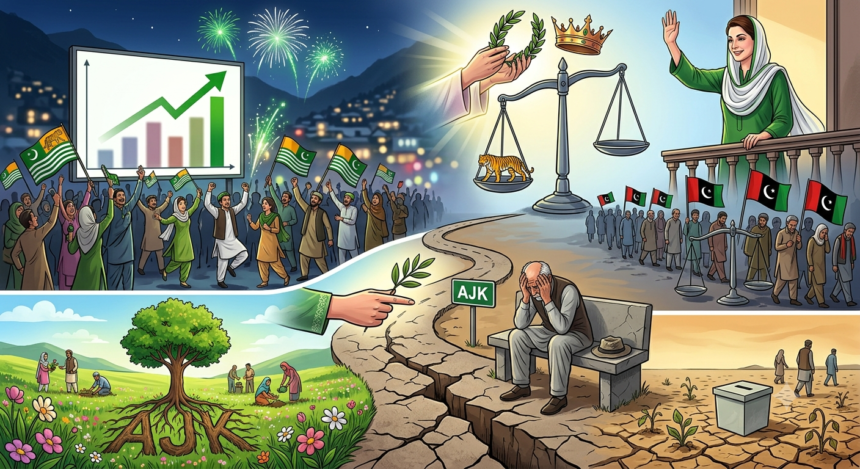
Punjab Chief Minister Maryam Nawaz has declared the PML-N’s performance in the first phase of the Azad Jammu and Kashmir (AJK) local government elections an “outstanding victory.” Addressing party workers in Lahore, she framed the results as a clear mandate from the region and urged the Pakistan Peoples Party (PPP) to stop disputing the outcome.
“The people of Kashmir have spoken,” Maryam said, dismissing claims of electoral irregularities raised by opposition leaders. She insisted that the PML-N’s success reflects public confidence in the party’s development agenda rather than the administrative maneuvering suggested by rivals.
The PPP, however, remains unconvinced. Party leaders have alleged that the polling process was marred by intimidation and that the results in several key districts do not align with exit data gathered by their own observers. They have demanded a formal audit of the vote count in contested areas.
Maryam’s directive for the PPP to “accept defeat” signals a hardening stance as the two parties—nominally allies in the federal coalition—clash over regional influence. While the federal government relies on a delicate power-sharing arrangement, the friction in AJK threatens to expose deeper fractures in their working relationship.
The PML-N leadership views this win as a vital test for its political revival in the valley. By aggressively claiming the mandate, the party is looking to consolidate its grip on local governance structures before the next cycle of regional legislative elections.
For the PPP, conceding now would mean losing significant ground in a traditional stronghold. With both sides digging in, the dispute over the election’s legitimacy is likely to move from public rallies to the Election Commission of AJK, where formal challenges are expected to be filed in the coming days.
The results stand as they are for now, but the political fallout is just beginning. Whether the PML-N can translate this victory into effective local governance—or if the PPP’s allegations gain traction—will determine the stability of the region’s political landscape for the remainder of the term.