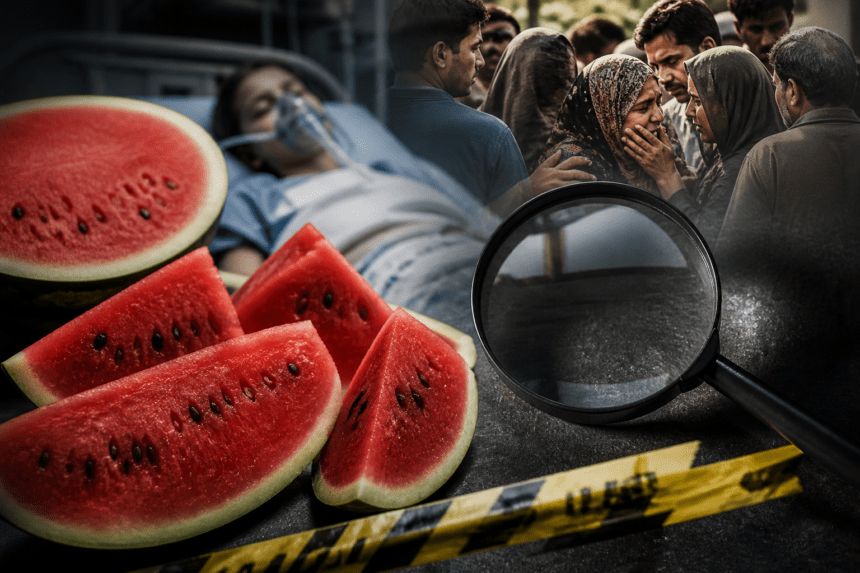
The investigation into the deaths linked to contaminated watermelons has hit a wall, leaving public health officials and grieving families without clear answers.
While initial reports pointed toward a specific pesticide residue, federal labs are now questioning those findings, turning what seemed to be a straightforward food safety incident into a complex forensic puzzle. Local health departments in the affected regions have pulled specific batches of melons from store shelves, but they haven’t identified a singular point of origin.
The supply chain for this season’s harvest is fragmented. Melons from three different states were mixed at a regional distribution hub before reaching the retail market. Tracing a specific fruit back to a single farm has become a logistical nightmare for investigators.
“We are chasing ghosts,” said a lead inspector at the state department of agriculture, who requested anonymity due to the ongoing nature of the inquiry. “The chemical markers we’re finding don’t align with common agricultural practices. We aren’t looking at a simple case of improper spraying.” Public confidence is fraying. Retailers have seen watermelon sales plummet by 60% in the last week, even for produce sourced from regions not under scrutiny.
The economic fallout for local farmers is immediate, yet the pressure to prioritize safety over profit remains the primary directive from the Governor’s office. Toxicologists are now exploring the possibility of intentional tampering during transit rather than contamination at the field level. This shift in focus from “agricultural oversight” to “criminal investigation” marks a significant escalation.
If the contamination occurred while the produce was in a climate-controlled trailer, the liability shifts from the farmer to the logistics provider. The families of the victims are demanding transparency, but agencies are keeping their findings close to the vest. They fear that releasing incomplete data—or worse, the wrong data—will cause unnecessary panic.
“They tell us they’re working on it,” said Mark Thompson, whose brother was hospitalized after consuming fruit from the suspected batches. “But ‘working on it’ doesn’t bring anyone back. We need to know if the food in our fridge is safe to eat today.
” As the labs continue to run mass spectrometry tests on the remaining samples, the timeline for a definitive answer remains open-ended.
Until the source of the toxicity is confirmed, the advice from the health department remains simple: throw it out, regardless of where it was bought.