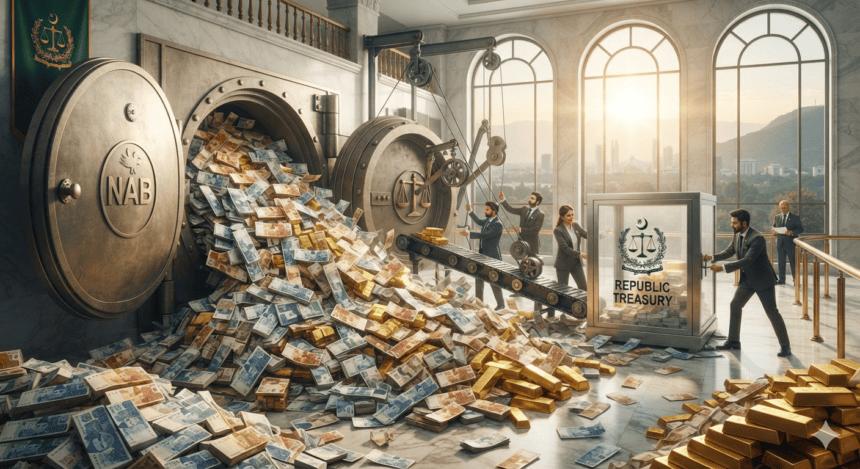
The National Accountability Bureau (NAB) has clawed back Rs5.4 trillion in its first six months of 2026, marking an unprecedented recovery in the agency’s history. The figure, confirmed by bureau officials Tuesday, dwarfs previous half-year totals and signals a shift in how the watchdog is pursuing state-level financial hemorrhaging.
The scale of the recovery suggests a move away from high-profile political arrests toward aggressive, systemic asset retrieval. Most of the funds originate from settlements with state-owned enterprises and private entities involved in long-standing infrastructure contract disputes.
“The focus has shifted to the ledger,” said a senior official familiar with the bureau’s internal operations. “We aren’t just chasing the headlines anymore. We’re chasing the cash.”
This surge in revenue arrives at a critical juncture for the national exchequer. With the government struggling to meet deficit targets, the sudden influx of Rs5.4 trillion provides immediate, albeit temporary, breathing room for the finance ministry. Critics, however, remain wary. They point out that these recoveries often involve complex out-of-court settlements that lack the transparency of a full judicial trial.
The bureau’s data shows the majority of these funds were recovered through “voluntary returns” and “plea bargains,” mechanisms that have historically drawn scrutiny from the Supreme Court. While these methods bypass lengthy court battles, they leave the public with few details regarding who exactly is being held accountable for the initial loss of funds.
The recovery numbers are expected to be presented to the National Assembly’s Standing Committee on Law and Justice next week. Whether lawmakers will demand a breakdown of the sources behind these trillions remains the central question.
For now, the government has a record-breaking figure to tout. But until the bureau offers a granular look at the settlements, the public will likely continue to view these “recoveries” with more skepticism than celebration.