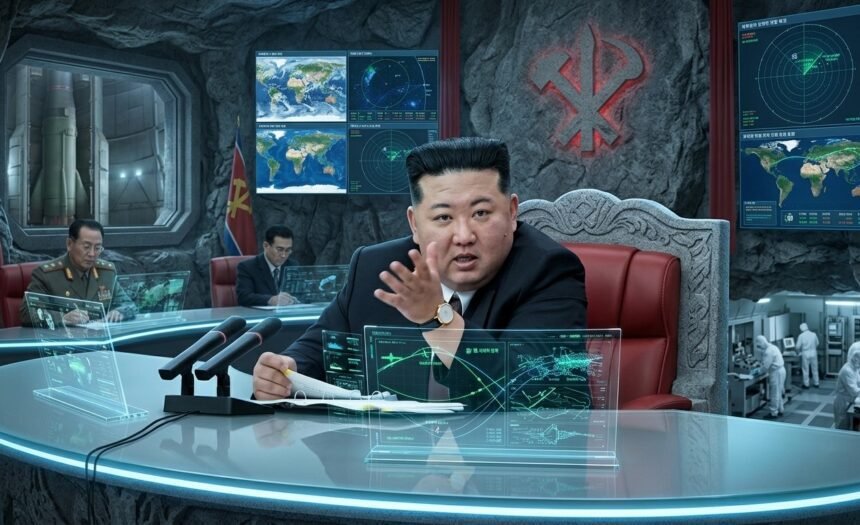
North Korea has rejected a recent resolution by the International Atomic Energy Agency (IAEA) criticising Pyongyang’s nuclear weapons programme, reaffirming that it will continue to maintain its nuclear capabilities.
The response came after the IAEA adopted a resolution at its 70th General Conference in Vienna on September 17. The resolution reaffirmed that North Korea cannot be recognised as a nuclear-weapon state under the Nuclear Non-Proliferation Treaty (NPT) and called on Pyongyang to immediately halt all nuclear-related activities. The resolution was approved by 103 countries, while six voted against and 14 abstained.
Kim Yo Jong, the sister of North Korean leader Kim Jong Un, strongly criticised the IAEA resolution. She accused the agency of applying what she described as “double standards” and argued that it was ignoring nuclear-related developments involving the United States and South Korea.
Kim said North Korea’s nuclear capabilities were necessary for its security and rejected any suggestion that Pyongyang would give up its nuclear status. North Korea’s Foreign Ministry separately described the resolution as the product of hostile forces and said the country’s nuclear status was permanently established by its state laws and nuclear deterrent.
The IAEA has continued to express concern about North Korea’s nuclear activities despite having no inspectors inside the country since 2009. The agency relies largely on satellite imagery and publicly available information to monitor developments at North Korean nuclear facilities.
Recent IAEA assessments have pointed to continued activity at the Yongbyon and Kangson nuclear sites, including indications of uranium-enrichment operations. The agency has warned that the continued expansion of North Korea’s nuclear infrastructure raises serious concerns about the production of weapons-grade nuclear material.
The latest dispute further highlights the long-running disagreement between Pyongyang and the international nuclear watchdog over North Korea’s nuclear programme. While the IAEA and many countries continue to call for denuclearisation and compliance with international obligations, North Korea maintains that its nuclear force is essential to national security and says it has no intention of abandoning it.