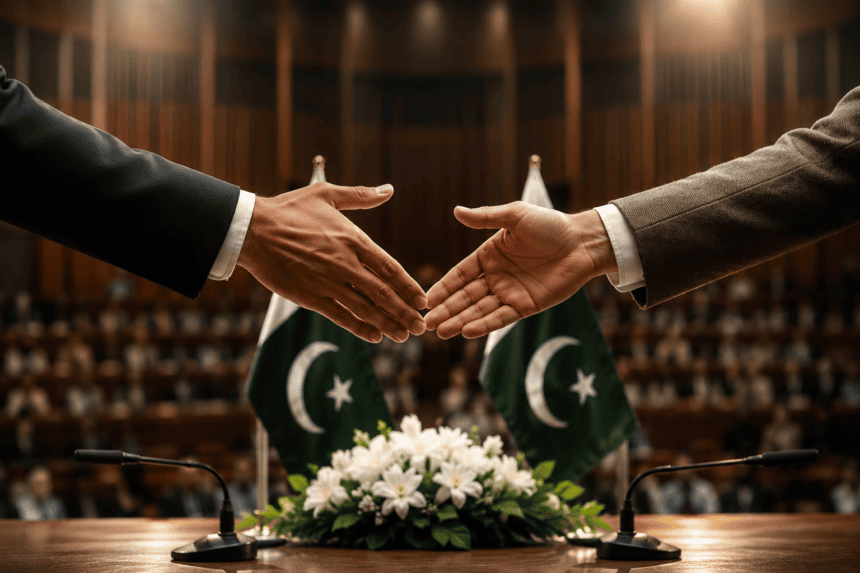
Nawaz Sharif has issued a sharp call for political decorum, urging rivals to keep ideological disagreements from spiraling into personal vendettas. The former prime minister’s comments come as the country’s political temperature remains at a boiling point, with opposition parties and the ruling coalition locked in a cycle of confrontation.
Speaking at a party gathering, the PML-N leader argued that the current trajectory of political discourse is unsustainable. He insisted that competition is the lifeblood of democracy, but warned that when it bleeds into genuine malice, the entire state apparatus suffers.
“We are political rivals, not enemies,” Sharif said. He suggested that the constant escalation of rhetoric is doing more than just stalling legislation—it is eroding the public’s faith in the parliamentary process itself.
Critics of the PML-N, however, have been quick to point out the irony in the statement. Opposition figures argue that the government’s own legislative maneuvers and the ongoing crackdown on dissenting voices have fueled the very animosity Sharif now decries. For them, the call for “restraint” sounds like an attempt to silence opposition under the guise of civility.
The timing of his remarks is telling. With the government facing intense pressure over economic instability and a polarized judiciary, Sharif’s attempt to pivot toward reconciliation suggests a need to stabilize the political environment. Behind closed doors, party insiders admit that the current gridlock makes it nearly impossible to push through the structural reforms required to appease international creditors.
Yet, Sharif’s appeal faces a steep uphill battle. The divide between the ruling coalition and the PTI-led opposition remains wider than at any point in the last decade. Trust has evaporated; every invitation to talk is now viewed through a lens of suspicion, interpreted by the other side as a tactical ploy rather than a genuine gesture of peace.
Unless these parties find a way to separate policy disputes from personal attacks, the cycle is likely to continue. Sharif’s words may have hit the right notes in a public forum, but in the halls of power, the rhetoric remains as sharp as ever.