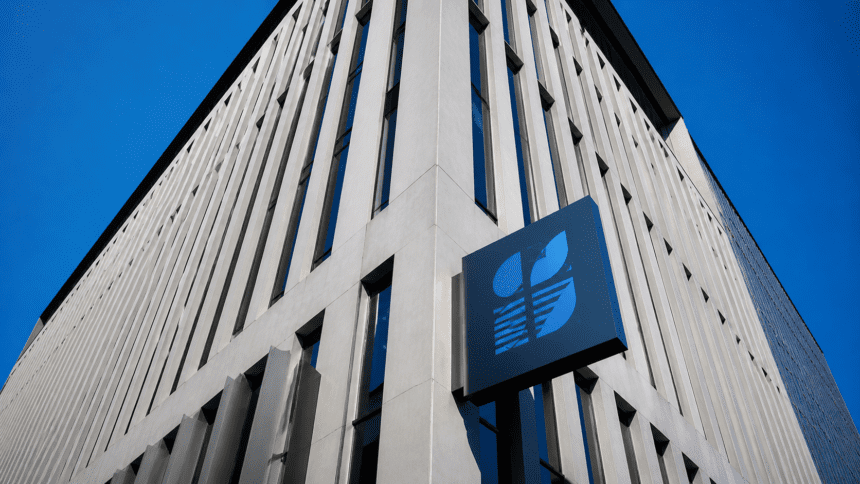
OPEC+ is heading into its first production decision since the United Arab Emirates formally left the group on May 1, putting unusual pressure on a coalition that was already trying to manage war-driven supply disruptions, internal quota strains, and a nervous oil market. The eight countries that have been handling the alliance’s voluntary cuts were scheduled to meet on Sunday, May 3, after OPEC said last month they would review market conditions monthly.
At the center of the meeting is a fairly modest number with outsized significance: about 188,000 barrels a day. That is the size of the production increase several Reuters-sourced reports said was likely to be approved for June, following earlier moves by the same core producers to begin unwinding part of their voluntary cuts this year. Back on March 1, OPEC said the eight countries had agreed to resume unwinding part of the 1.65 million barrels a day in voluntary adjustments, with a 206,000 barrel-a-day increase for April. On April 5, OPEC said those countries would keep meeting every month and specifically named May 3 as the next checkpoint.
That makes this more than a routine quota meeting. The UAE was not just another member; it had been one of the group’s biggest producers and one of the most restless voices inside the alliance, having invested heavily in capacity and pushed for more room to pump. In announcing its departure, the UAE said the move reflected its long-term strategic and economic vision and would take effect on May 1, 2026. The split leaves OPEC+ trying to show continuity at a moment when the market is already asking whether the group can still move in lockstep.
The timing is awkward, to put it mildly. Oil prices have been heavily influenced by the regional conflict involving Iran and by export disruptions tied to the Strait of Hormuz. OPEC itself said in April that member countries had helped keep supply available through alternative export routes, helping reduce volatility. Even so, the market has been trading on geopolitics as much as on formal quotas. Brent was around $108 a barrel on May 1, according to Trading Economics data cited on May 3, after a volatile stretch in late April.
There is also the familiar OPEC+ problem that never really goes away: announced increases do not always translate into the same amount of real extra oil. Some members have struggled to hit their targets, while others have been under pressure to compensate for past overproduction. OPEC’s recent press releases have repeatedly referenced compensation plans from countries including Iraq, the UAE, Kazakhstan, and Oman, which tells you the alliance is still balancing headline discipline against messy real-world compliance.
So the expected June increase, if it is confirmed, would send a mixed but deliberate signal. On one hand, OPEC+ would be saying it still wants to return supply gradually and defend market share where it can. On the other, the small size of the hike suggests the group is not ready to open the taps in a serious way while war risk remains high and shipping routes stay fragile. That caution lines up with OPEC’s own recent language about “market stability,” “healthy market fundamentals,” and low inventories.
For traders, ministers, and consuming countries alike, this meeting matters less because of the raw barrel count and more because of what it says about control. The UAE’s exit has introduced a fresh crack into a coalition that has spent years trying to project cohesion. If OPEC+ can still deliver a calm, incremental decision after losing one of its most ambitious producers, that will be read as a sign that the alliance remains functional. If not, markets will start pricing in a looser and far less predictable oil order.