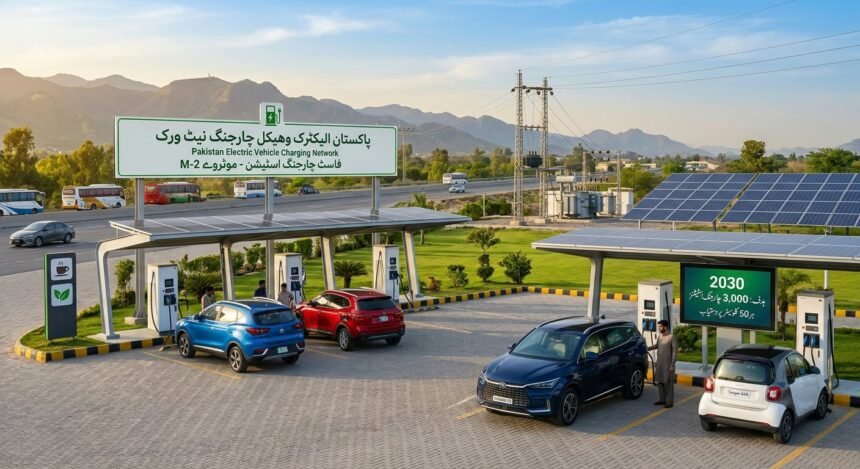
ISLAMABAD: Pakistan is planning to expand its electric vehicle (EV) charging infrastructure, with a target of establishing approximately 3,000 public charging stations by 2030. The initiative aims to encourage the adoption of electric vehicles, improve access to charging facilities and support the country’s transition towards cleaner transportation.
Under the reported plan, fast-charging facilities are expected to be developed along motorways and major highways, with a long-term target of providing charging points at intervals of approximately 50 kilometres on selected routes.
Fast Chargers Planned for Motorways and Highways
One of the major objectives is to make long-distance travel easier for electric vehicle owners. The availability of fast chargers at suitable locations would allow drivers to recharge their vehicles during journeys instead of relying entirely on charging facilities in cities.
The government also plans to encourage the development of charging infrastructure at fuel stations, commercial areas, parking facilities and other suitable locations.
Support for Electric Motorcycles and Rickshaws
The broader electric mobility initiative also focuses on two-wheelers and three-wheelers, including electric motorcycles and rickshaws. Battery-swapping facilities may provide an additional option for users whose vehicles support compatible battery systems.
Such facilities could help reduce waiting times for certain users, particularly commercial riders and drivers who depend on their vehicles for daily income.
Government Incentives and Investment
Pakistan’s National Electric Vehicle Policy 2025–30 aims to promote electric mobility and encourage investment in the charging network and related industries.
Government support programmes have also included financial incentives for eligible electric two-wheelers and three-wheelers. The availability and amount of any subsidy depend on the relevant scheme, eligibility criteria and official announcements.
Private-sector investment is expected to play an important role in establishing charging stations, installing equipment and maintaining the network.
Potential Benefits for Pakistan
A wider charging network could help address one of the main concerns of potential EV buyers: access to charging facilities during daily commutes and long-distance journeys.
Greater use of electric vehicles could also reduce dependence on imported petroleum products and help lower transport-related emissions. However, the overall environmental and economic benefits will depend on electricity generation, vehicle costs, charging prices and the successful implementation of the programme.
Implementation Remains Key
The target of 3,000 charging stations by 2030 represents a planned objective rather than confirmation that all facilities have already been installed. Similarly, the proposed 50-kilometre spacing should be understood as a long-term infrastructure goal, not a guarantee that every major highway currently offers charging at these intervals.