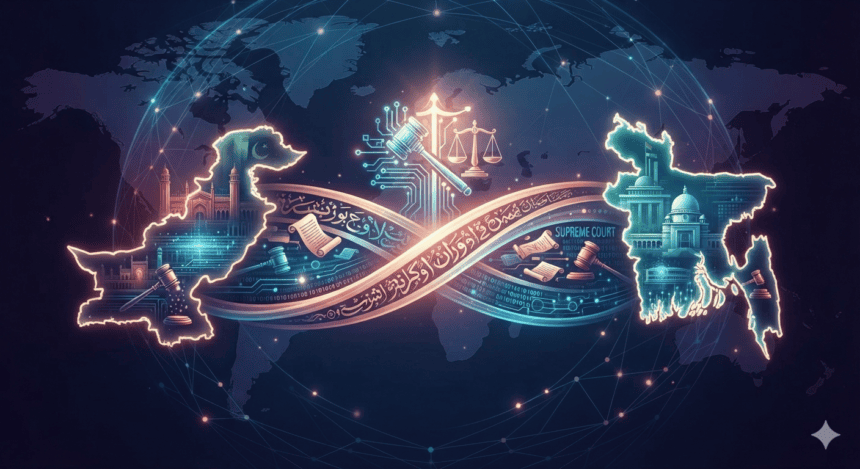
Pakistan has formally extended an offer to Bangladesh to share expertise in legal reforms and the implementation of digital justice systems. The proposal comes as both nations look to modernize their respective judicial frameworks and address mounting case backlogs.
The initiative, communicated through diplomatic channels, focuses on integrating digital infrastructure into court proceedings—an area where Pakistan has made strides through its e-court initiatives and automated case management systems. Islamabad’s pitch centers on “cross-border knowledge exchange,” specifically targeting how technology can expedite trial processes and improve transparency.
For Bangladesh, the timing is relevant. The interim government in Dhaka is currently navigating a period of institutional transition, with a heavy emphasis on judicial independence and administrative efficiency. Integrating digital tools to clear thousands of pending cases has become a priority for the Bangladeshi legal establishment.
“Digital justice isn’t just about moving files to a screen,” said a senior official familiar with the proposal. “It’s about fixing the bottleneck at the entry point of the justice system.”
The offer isn’t limited to software. Pakistan’s proposal includes training programs for judicial officers and court staff, aiming to standardize digital literacy across the legal sector. By leveraging shared historical legal frameworks—both countries utilize a similar colonial-era civil and criminal procedure code—the transition to digital record-keeping could theoretically be more seamless than if they were adopting international models from scratch.
Analysts suggest the move is as much about regional diplomacy as it is about judicial reform. Strengthening ties through institutional cooperation allows both capitals to bypass political friction and focus on technical, non-controversial partnerships.
However, the proposal faces internal hurdles. In both countries, the legal fraternity—often resistant to rapid technological change—remains a powerful stakeholder. Implementing these reforms requires more than just government intent; it requires the buy-in of the bar associations, who have previously resisted digital shifts that threaten traditional, paper-based billing and filing methods.
Whether Dhaka accepts the offer remains the primary question. With Bangladesh currently prioritizing its own internal stability, the proposal provides a practical, low-stakes avenue for the two nations to re-engage on a functional level. If successful, it could signal a shift toward pragmatic bilateralism, moving past historical grievances to address the shared, grinding reality of judicial delay.